01
Build the case early
Intake, registration, queue, walk-ins, and vitals prepare the story before the doctor opens the visit.
Live demo
See Co Doctor on one OPD case.
Platform
Co Doctor connects admin, reception, nurse triage, doctor consultation, orders, lab, pharmacy, WhatsApp, monitoring, follow-up, and governance around one doctor-led workflow.
Meera Sharma - 39F
Today's Queue - OPD consultation
Clinical Synthesis
BP 126/82 - SpO2 98%
Fever + cough
None urgent
Diagnosis / Rx / Prognosis
URTI likely
Brand + dose pattern
CBC / CRP if needed
Expected course + red flags
Mark complete triggers
Mark completePrint Rx
EHR sync
Follow-up
Monitoring
Recovery brief
Platform spine
The platform is broad, but the doctor story is simple: build the case, support the decision, close the order loop, and continue care until follow-up.
Intake, registration, queue, walk-ins, and vitals prepare the story before the doctor opens the visit.
The doctor sees story, risk, prior treatment, diagnosis direction, prognosis, orders, and prescription in one workspace.
Lab and pharmacy work stays connected, so results and dispensing status return to the clinical story.
Messages, portal access, check-ins, and recovery summaries turn the visit into a managed journey.
Role workspaces
Doctors, staff, admins, and patients do different work. Co Doctor gives each role the right view while preserving one patient journey.
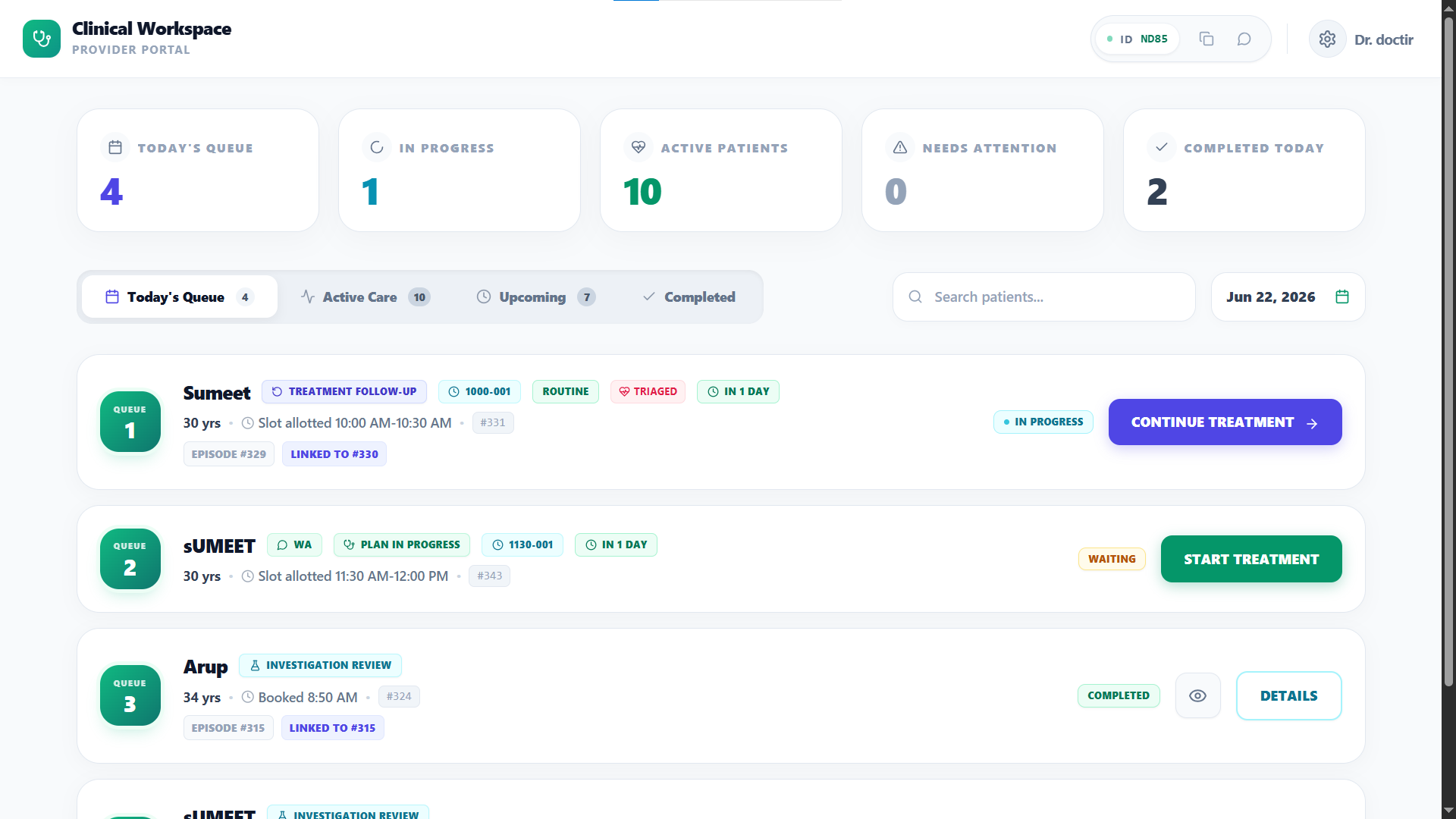
Start with context, approve diagnosis/prognosis/Rx drafts, order tests, and review recovery without rebuilding the case.
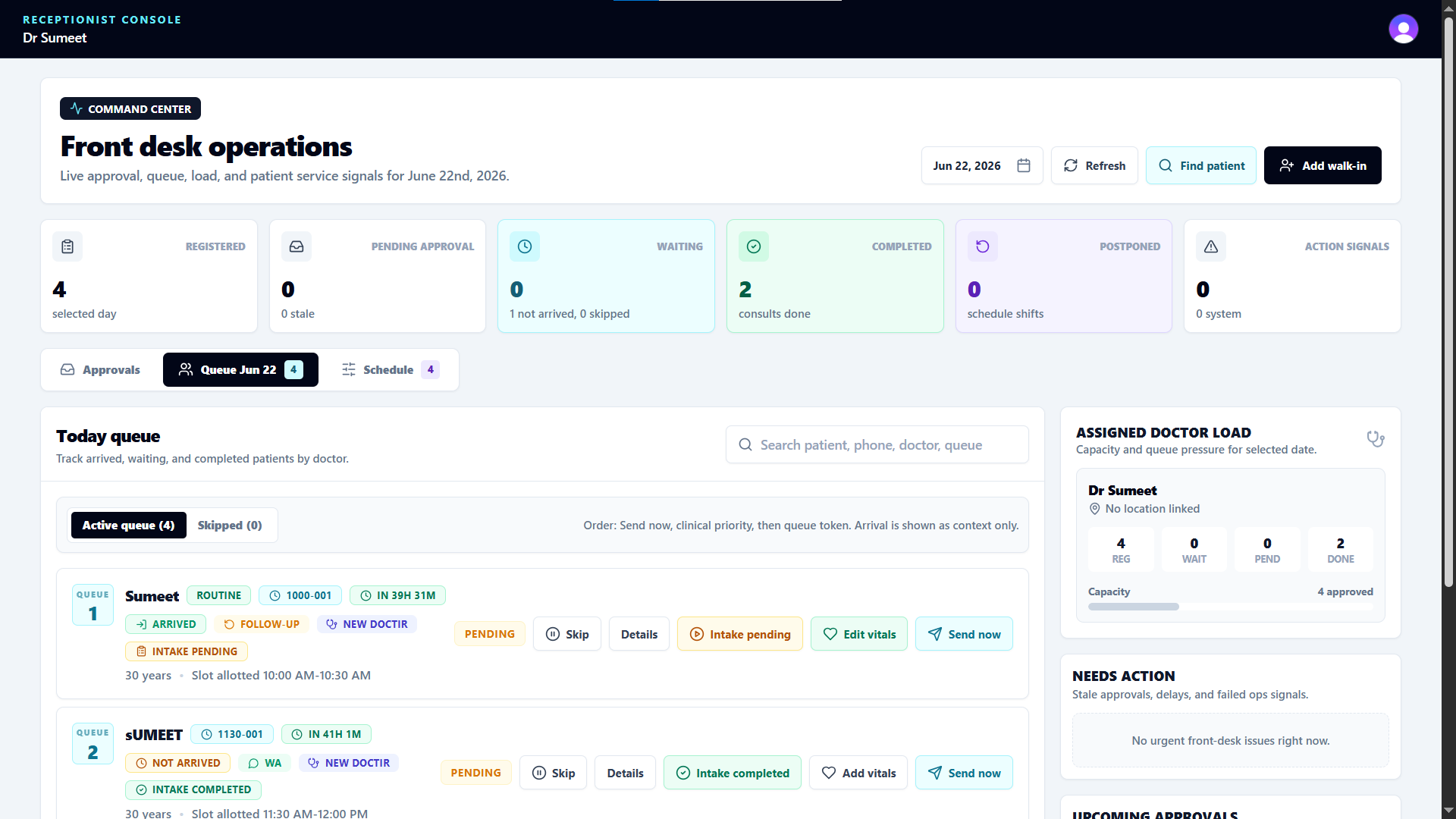
Move patients from booking or walk-in to the right doctor while preserving identity, queue state, and visit reason.
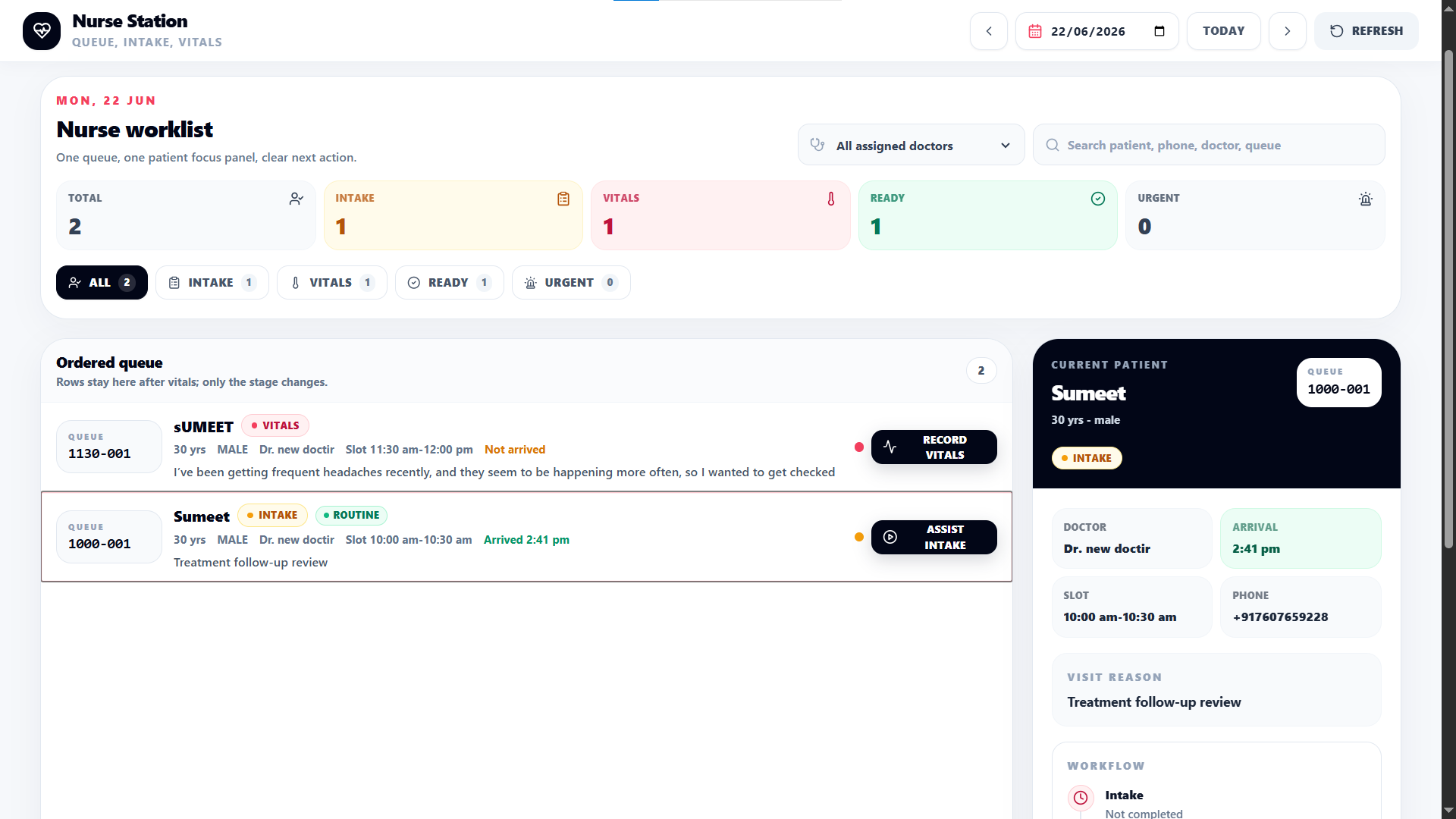
Capture vitals and triage signals that make the doctor's first decision faster and safer.
Return results to the case so the follow-up opens with report context, not a stray PDF.
Record dispensing against the visit so treatment history stays visible when the patient returns.
Control teams, providers, locations, templates, integrations, audit, and scale settings without changing the doctor's OPD workflow.
Capabilities
Co Doctor is not a narrow AI widget. It is the operational and clinical layer that keeps outpatient care connected after the patient leaves.
Clean patient identity, MRN assignment, duplicate-aware lookup, allergies, problem lists, clinical history, and active orders.
Doctor booking codes, request approval, walk-ins, check-in, defer, reschedule, and a full visit timeline.
Encounters, observations, diagnoses, prognosis, notes, allergies, conditions, and orders captured as coded clinical data.
Drug, lab, test, and referral orders with revision, discontinuation, lab result posting, and pharmacy dispense status.
Secure intake and portal links for scheduling, check-in, cancellation, feedback, report access, and follow-up.
RBAC, audit trail, FHIR R4, HL7 v2, per-tenant credentials, terminology mapping, and optional outbound EHR push.
Complete clinic and hospital OPD management
Run reception, nurses, doctors, lab, pharmacy, patient communication, follow-up, and admin control from one connected visit record.
Fewer operational leaks
Registration, vitals, consults, orders, reports, medicines, messages, and follow-up stay tied to one visit.
Clear ownership
Reception, nurse, doctor, lab, pharmacy, and patient-facing teams each see the next work they own.
Earlier intervention
Queue pressure, exceptions, workload, handoffs, and readiness issues surface before they become delays.
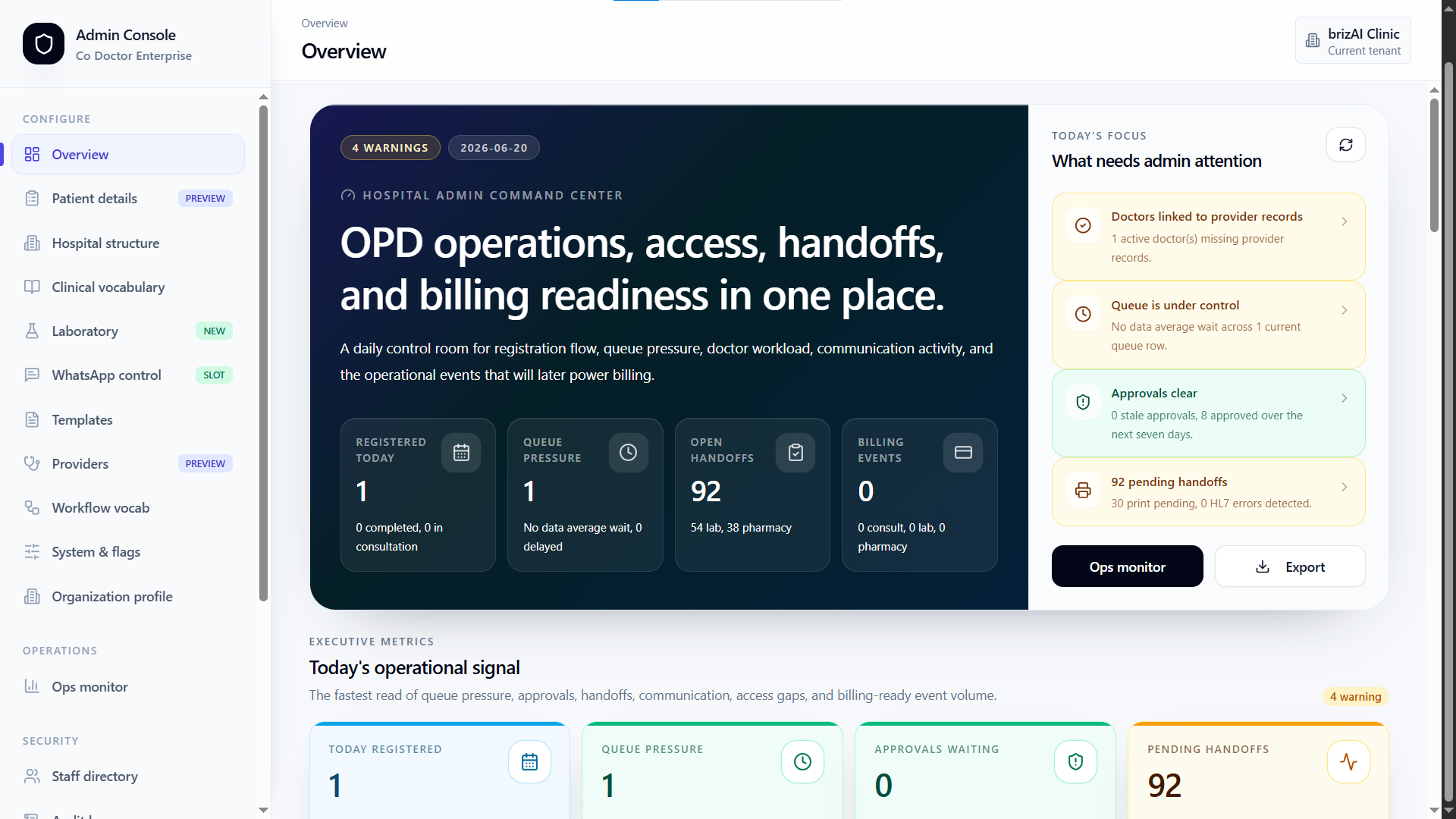
Real connected workspaces
Each workspace owns its part of the same OPD visit instead of creating another disconnected queue.
Operations control
Owned by Admin team
Set up staff, providers, roles, templates, integrations, feature flags, and audit control from one command layer.
Connected handoffs
Orders, medicines, instructions, exceptions, and follow-up do not sit in someone's memory. They move to the team console that owns the next action.
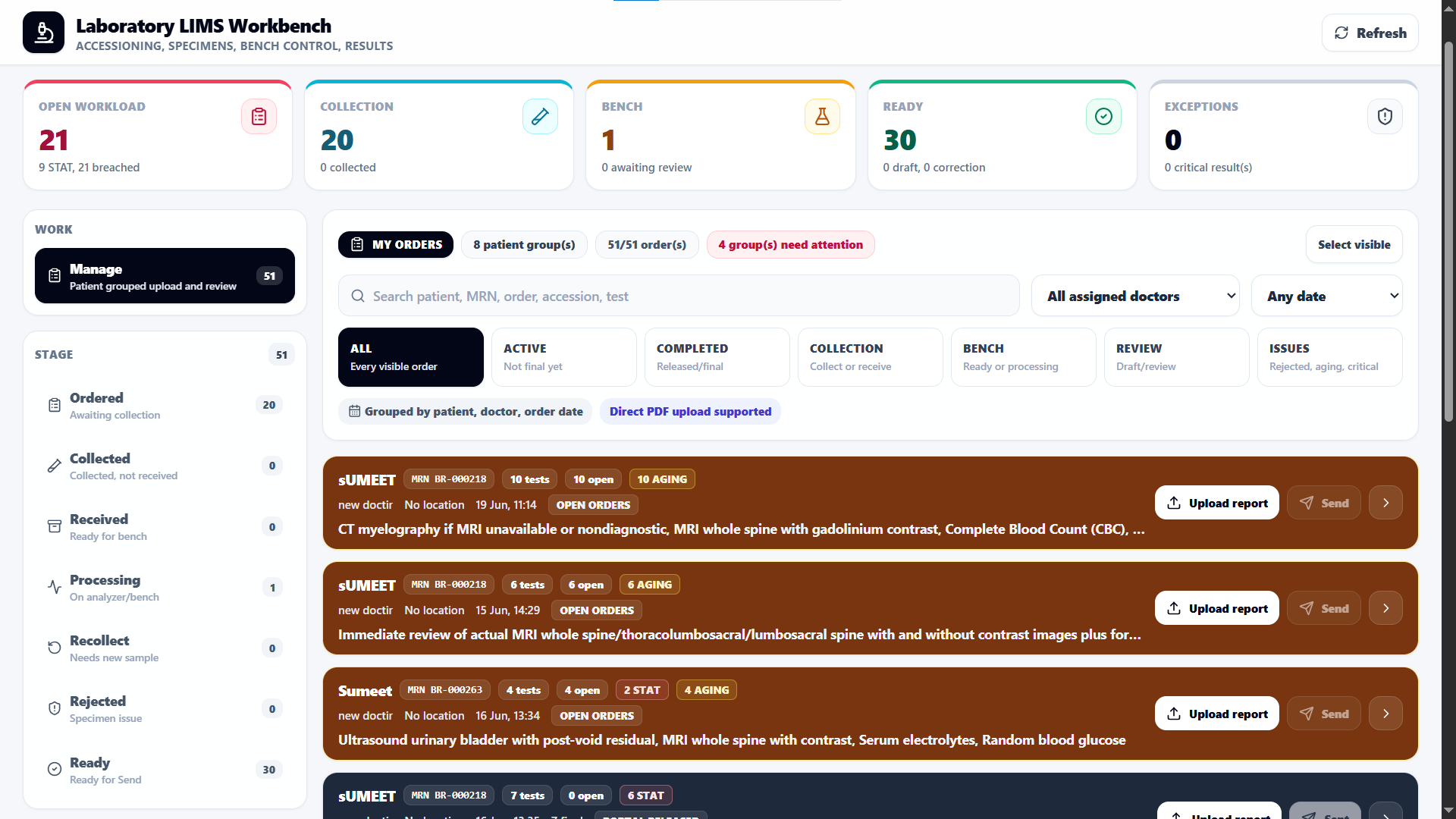
Lab receives the work, tracks collection and processing, then returns reports to the case.
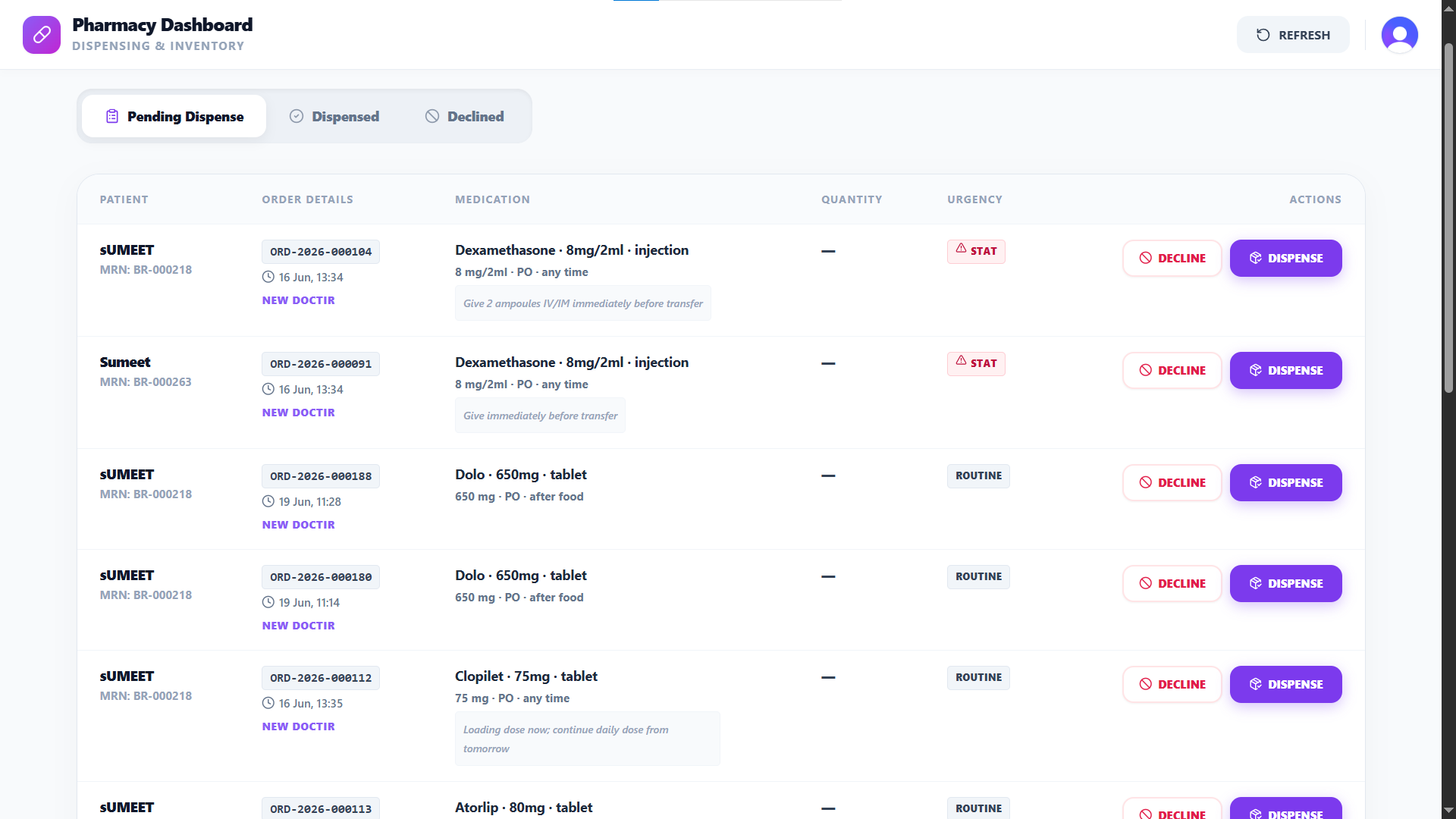
Pharmacy sees pending dispense, urgency, decline, and fulfilment status against the visit.
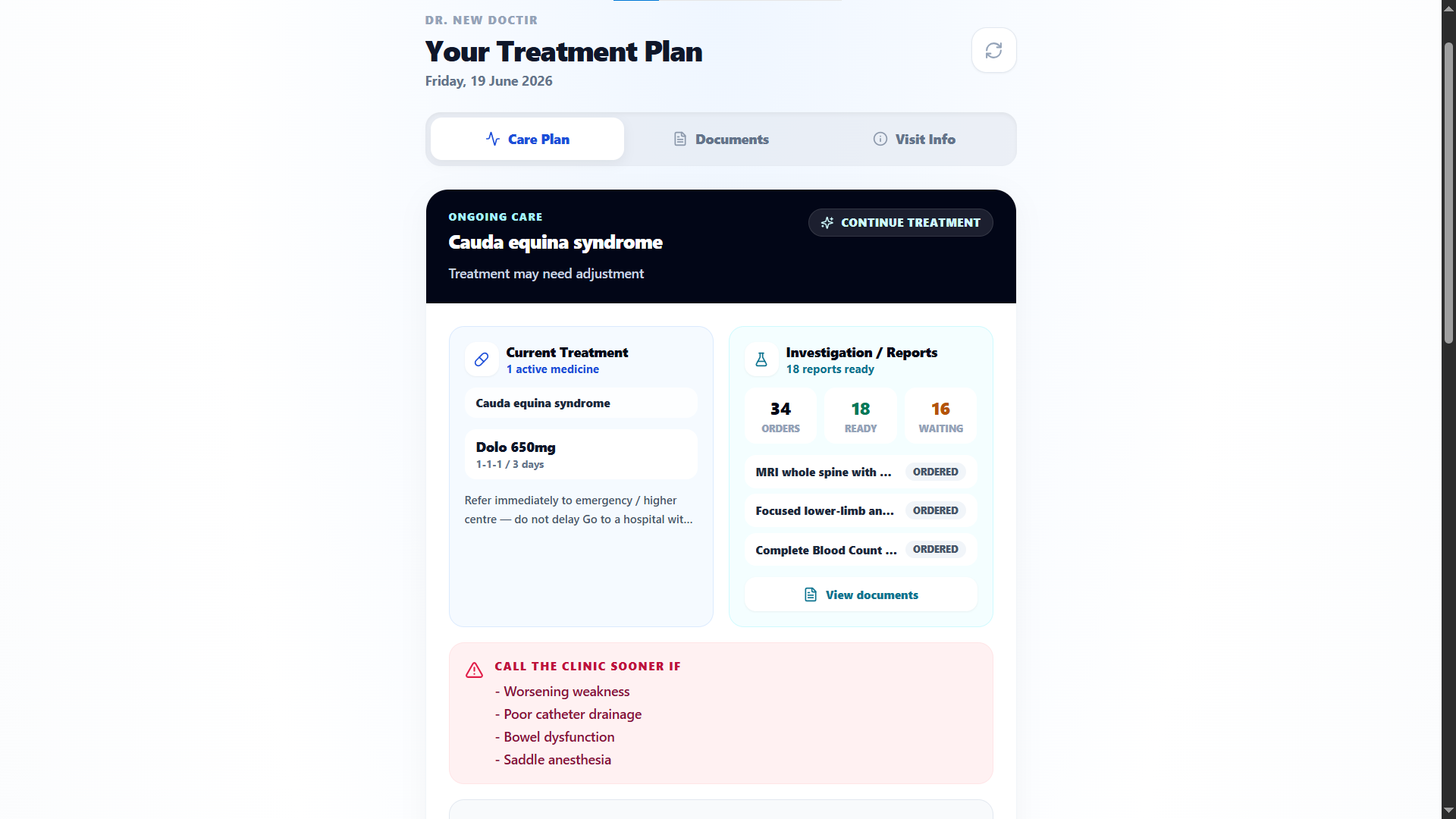
Instructions, reports, reminders, and follow-up access continue through the patient layer.
Admins can see stuck handoffs, workload pressure, approvals, and readiness gaps early.
Management capabilities
A clinic does not buy another screen. It buys fewer gaps between people, queues, orders, reports, medicines, messages, and follow-up.
Know who is booked, who arrived, who is waiting, who is done, and which doctor is under pressure.
Give doctors the visit story, investigation context, prior care, and next steps without starting cold.
Move intake, vitals, triage, reason for visit, and handoff notes into the doctor's case view.
Track orders from request to collection, processing, report upload, exception handling, and doctor review.
See pending dispense, urgent medicines, declined orders, and fulfilment status against the same visit.
Keep patients connected with no-login access to treatment plans, reports, instructions, reminders, and booking.
Control staff, providers, roles, templates, feature flags, integrations, and audit from one admin layer.
Spot queue pressure, stuck handoffs, exceptions, approvals, communication gaps, and readiness issues early.
Technical trust
A clinic gets the AI-assisted OPD workflow. Hospitals and networks add integration, local data expectations, and scale controls without changing the doctor experience.
Organisation-scoped row-level security on clinical tables; requests without tenant context fail closed.
LOINC, SNOMED CT, ICD-10, and RxNorm mappings keep data exchange-ready where configured.
Tenant-scoped clinical audit logs record actor, action, entity, and before/after changes.
Cloud-native Azure infrastructure with controlled deployments and post-release verification.
Ready to test it on a real OPD case?
We rebuild one patient from intake to Clinical Synthesis, diagnosis, prognosis, Rx, orders, Mark complete, WhatsApp, monitoring, and follow-up.