What changes
One patient journey, not staff chasing.
Reception, nurse, doctor, pharmacy, reports, WhatsApp, and follow-up stay connected.
Live demo
See Co Doctor on one OPD case.
For clinics
Co Doctor connects the small clinic reality: front desk, doctor queue, vitals, prescription, WhatsApp, pharmacy, reports, reminders, and follow-up around one patient visit.
Clinic goal
1
connected OPD queue from arrival to follow-up, instead of separate staff lists.
What changes
Reception, nurse, doctor, pharmacy, reports, WhatsApp, and follow-up stay connected.
Money
Review timing, report return, dispense status, and reminders reduce daily leakage.
Quality
Treatment plan, adherence, reports, and recovery response are ready for the next consult.
Jump to proof
Purchase proof
The clinic sales case is simple: fewer manual chases, more completed reviews, more service work tied to the visit, and patients who return with context.
Revenue
Review timing, reminders, booking links, and monitoring start from the doctor-approved plan.
Services
Lab result return and dispense status remain part of the visit, so review and fulfilment do not disappear.
Staff
Reception, nurse, doctor, pharmacy, and patient communication work from owned queues instead of messages.
Quality
The next consult opens with the previous plan, adherence, reports, recovery response, and pending concerns.
The shift
Clinic revenue and quality improve when the visit does not end at print. Co Doctor creates checkpoints that bring patients back with useful context and less staff chasing.
Prescription-based OPD
Treatment-based OPD
Checkpoint economics
For a clinic owner, the economics are in captured review visits, completed services, and fewer staff hours spent figuring out what happened next.
Before exit
Revenue
Appropriate cases leave with follow-up timing, reminder, and booking path already sent.
Quality
Patients know red flags, medicine instructions, tests, and when to come back.
Service loop
Revenue
Report upload and dispense status make service completion visible instead of lost in separate counters.
Quality
Doctors can review results and fulfilment against the original treatment plan.
Repeat visit
Revenue
Returning patients move faster through the queue because context is already attached.
Quality
Adherence, reports, response, and pending concerns are ready before the doctor decides.
Business case
A clinic buys Co Doctor if it makes the daily OPD easier to run and turns treatment plans into review, report, pharmacy, and patient-retention opportunities.
Leak today
Patients leave without a booked review
Checkpoint
Follow-up capture
Evidence to inspect
How many appropriate cases leave with review timing, reminder, and patient access already sent.
Leak today
Reports come back but are not tied to review
Checkpoint
Report-to-review loop
Evidence to inspect
Whether reports upload into the same case and trigger a doctor review or next appointment action.
Leak today
Pharmacy fulfilment is invisible to the doctor
Checkpoint
Dispense status
Evidence to inspect
Whether pending, dispensed, and declined medicines are visible against the visit and follow-up story.
Leak today
Staff ask each other what happened next
Checkpoint
Owned worklists
Evidence to inspect
Whether reception, nurse, doctor, pharmacy, and patient communication each show the next owned action.
Why this wins
A clinic does not need a prettier register. It needs the patient journey to keep moving after the doctor finishes, with less staff chasing and more recoverable revenue.
Stops losing
Follow-up timing, report return, and dispense status stay attached to the visit instead of living in separate lists.
Captures
Reception, nurse, doctor, pharmacy, and patient communication each see the next action and the patient state.
Closes sale
Queue pressure, pending reports, missed reviews, dispense gaps, and follow-up completion become visible by patient and owner.
Next step
The fastest clinic sale is one patient journey from arrival to follow-up, with staff handoffs and revenue work visible.
One missed-review or delayed-follow-up pattern
One report-return workflow that currently needs chasing
One pharmacy or service fulfilment gap
Buyer questions
That is the clinic buying question. Co Doctor has to reduce staff chasing, capture follow-up, and keep revenue work attached to the patient journey.
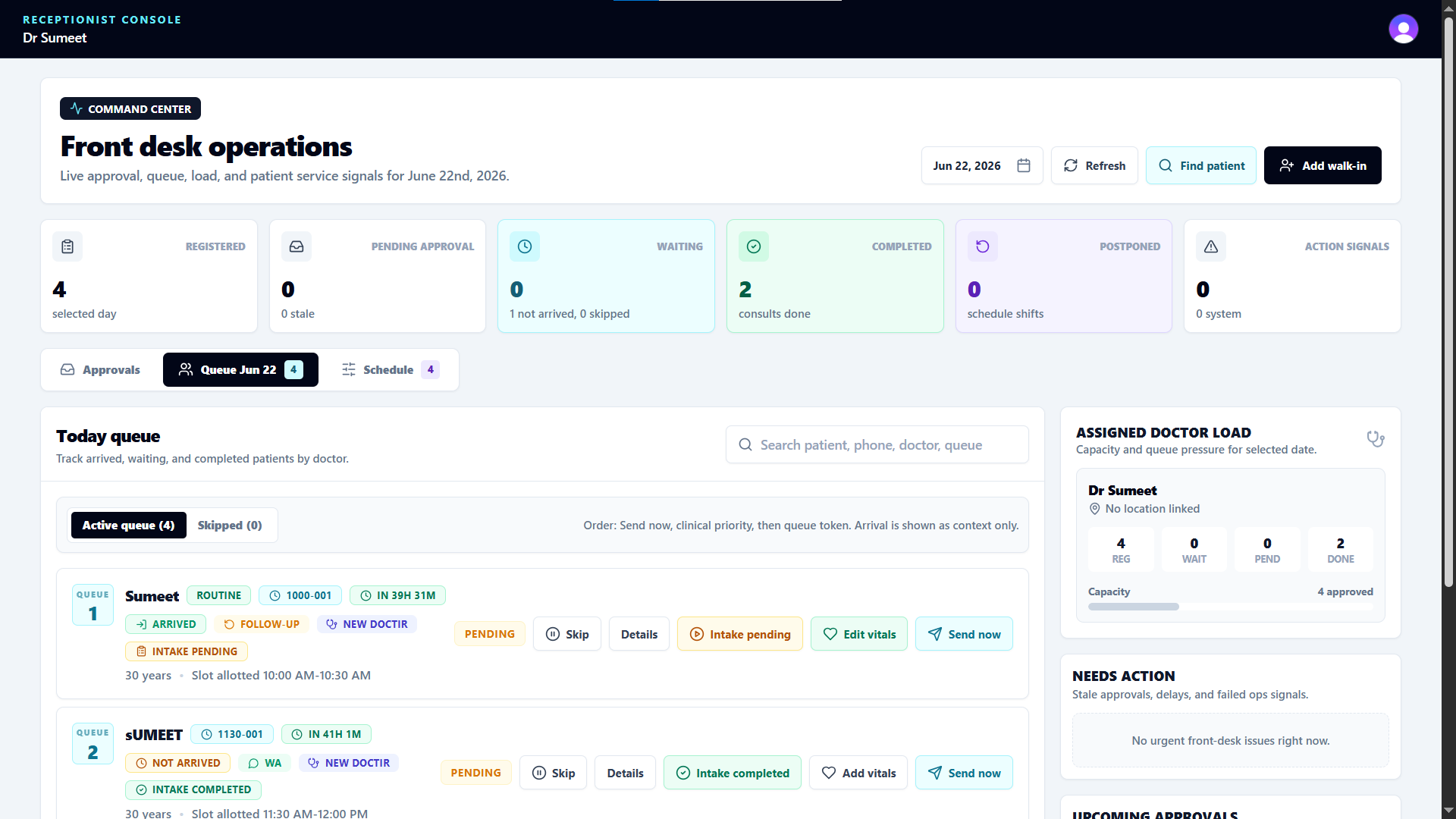
The clinic workflow starts with approvals, Today queue, add walk-in, find patient, schedule control, and clear patient state. It is built around work your staff already does.
The doctor value is direct: Clinical Synthesis opens with intake, vitals, reports, and prior context; repeat prescription work becomes reviewable draft work.
No-login treatment plan access, WhatsApp instructions, reminders, report access, monitoring, and follow-up keep the relationship attached to the original care plan.
What stays familiar
Co Doctor has to connect the day your staff already runs: front desk, nurse, doctor, pharmacy, reports, WhatsApp, and follow-up.
Staff
Reception, nurse, pharmacy, and patient communication see owned next actions instead of learning a complex charting system.
Doctors
Doctors open prepared context and draft treatment work, not a pile of admin screens.
Habits
The point is not to ban current habits; it is to attach messages, print, reports, and follow-up back to the visit.
One case path
A clinic owner should see one patient move through the day with staff ownership, service work, and follow-up attached.
Arrival
Approval, walk-in, doctor assignment, queue state, and visit reason stay visible.
01
Intake
Vitals, triage, reason for visit, and handoff context move into the doctor workspace.
02
Completion
Prescription, WhatsApp, pharmacy, reports, reminders, and follow-up actions come from the approved consult.
03
Return
Reports, response, adherence, dispense status, and recovery notes come back to the clinic relationship.
04
Workflow
Doctor, staff, patient, and admin work off the same treatment loop.
Approvals, walk-ins, queue position, doctor load, patient lookup, and schedule changes stay visible instead of living in phone calls.
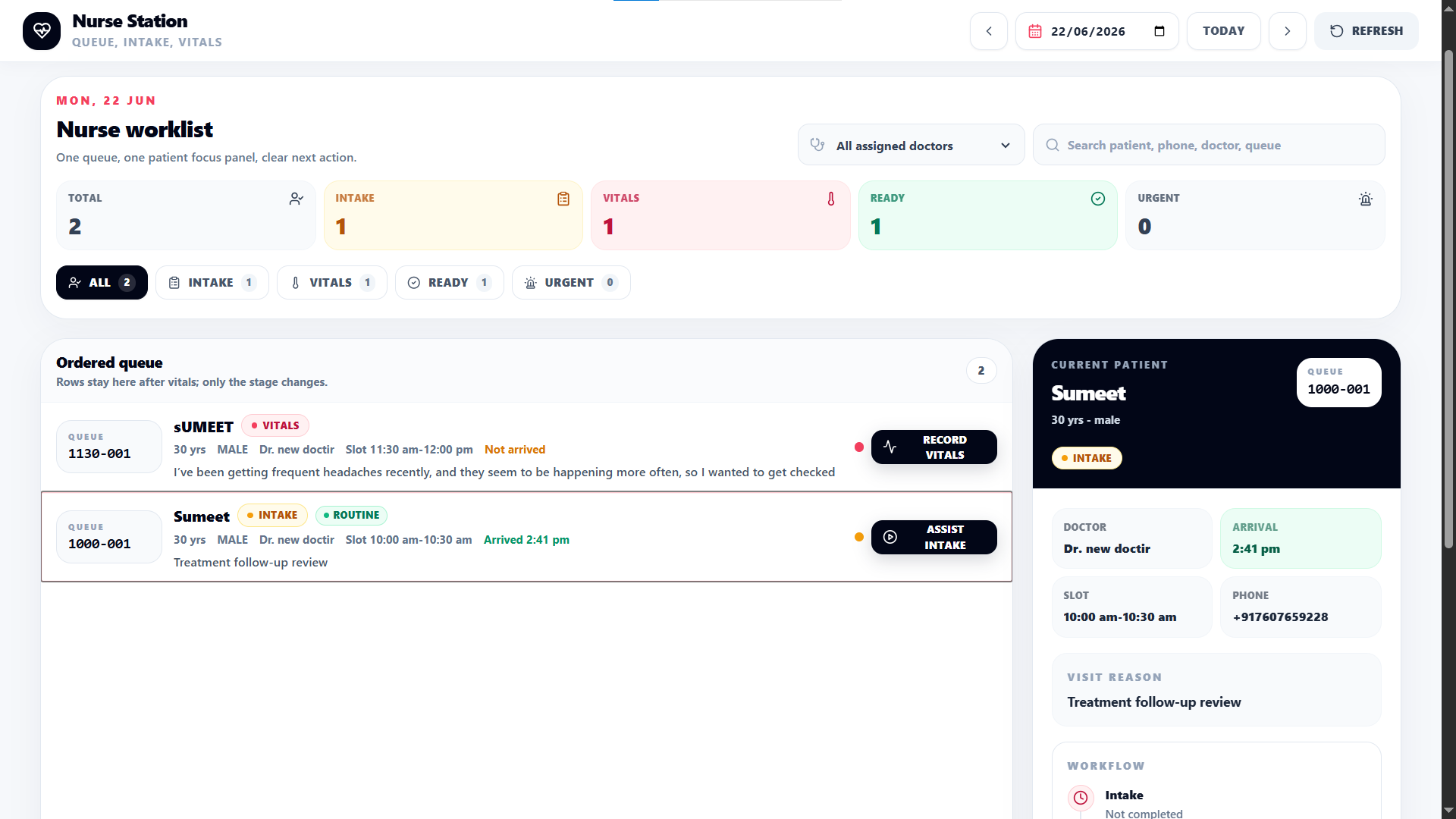
Vitals, reason for visit, triage notes, and handoff context move into the same case the doctor will continue.
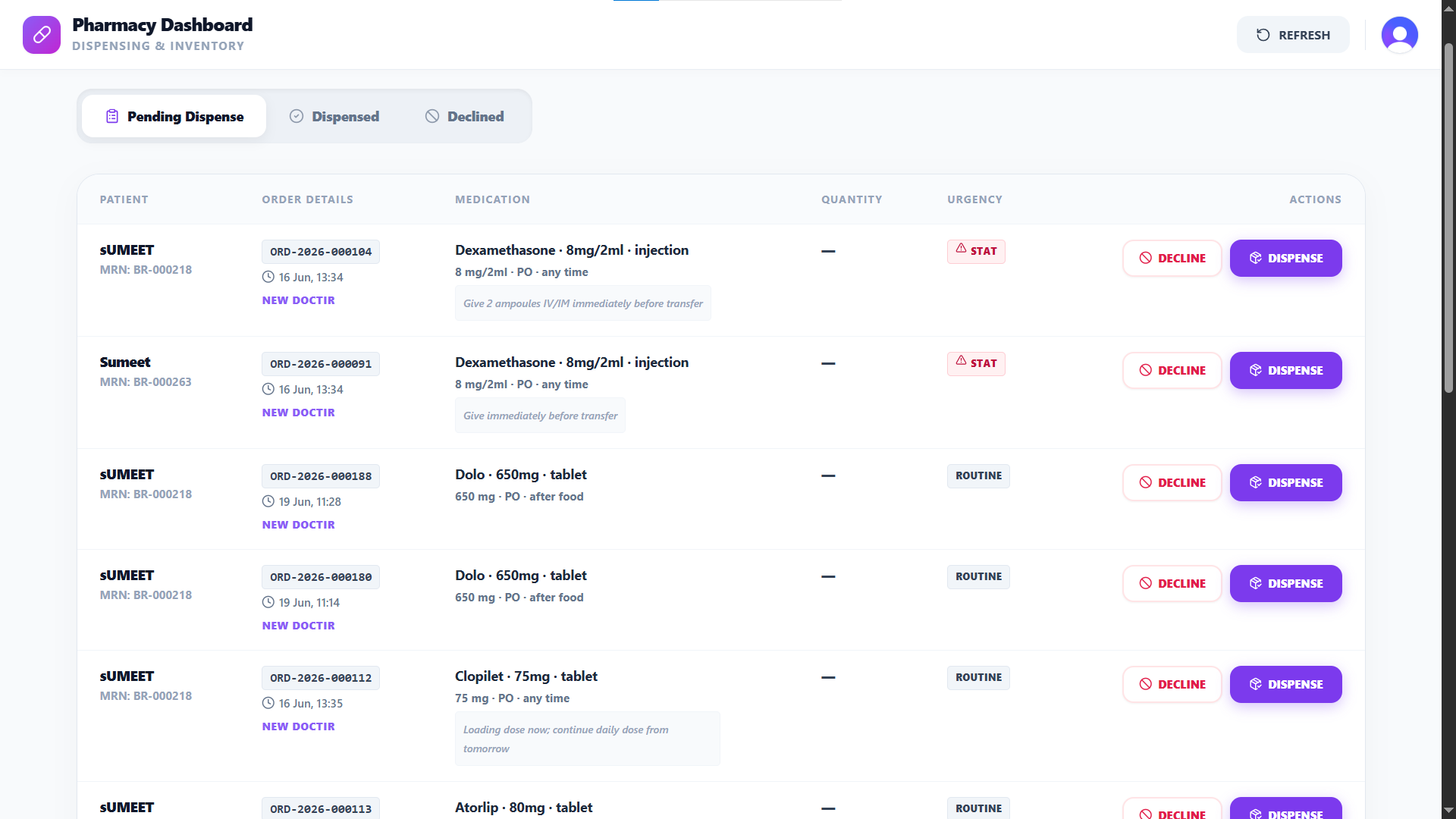
Medicines and fulfilment status are tied to the visit so treatment history is clear when the patient returns.
The clinic can send instructions, reminders, monitoring prompts, and booking links without starting a separate manual chase.
Buyer map
The owner buys the revenue and control story, but adoption depends on whether doctors and staff see simpler daily work.
Owner / manager
Cares about
Follow-up capture, service completion, queue control, and whether revenue leaks become visible.
Proof needed
Inspect missed reviews, pending reports, dispense gaps, queue pressure, and owner-visible next actions.
Doctors
Cares about
Prepared cases, fewer repeated questions, draft quality, and not losing clinical control.
Proof needed
Open the doctor workspace after intake and compare draft Rx/orders/advice against common practice.
Front desk / nurse / pharmacy
Cares about
Clear worklists, fewer phone calls, and knowing who owns the next patient step.
Proof needed
Move one patient through arrival, vitals, consult completion, pharmacy/report return, and follow-up.
Who wins
Less chasing, cleaner handoffs, more patients completing the next step.
Reception
Before
Approvals, walk-ins, queue, patient lookup, and follow-up are split between registers and messages.
With Co Doctor
Controls approvals, Today queue, walk-ins, patient state, and next action from one front-desk surface.
Doctor and nurse
Before
Nurse intake and doctor consultation often duplicate questions or miss context.
With Co Doctor
Vitals, triage, history, and reports feed the doctor workspace before treatment starts.
Owner / manager
Before
Revenue leakage hides inside missed follow-up, unreviewed reports, and unclear staff ownership.
With Co Doctor
Can inspect follow-up capture, report return, dispense status, queue state, and completion actions.
Money and quality
More completed treatment loops, fewer lost handoffs, and stronger review context.
+follow-up
Treatment checkpoints and reminders convert appropriate cases into booked follow-up instead of forgotten advice.
+throughput
Prepared intake, vitals, reports, and repeat Rx drafts make the consult faster without making it feel rushed.
+fulfilment
Dispense, report upload, and review status remain tied to the patient visit, improving service capture and continuity.
Cleaner handoffs
Every stage has an owner, reducing missed vitals, delayed reports, and unclear next action.
Better patient instructions
WhatsApp and portal access reinforce dosage, red flags, tests, and review timing after the patient leaves.
Less cold-start care
Follow-up begins with the previous plan, response, and reports already visible.
Product proof
Proof checklist
The page should convince only if the workflow makes daily leakage visible and easier to recover.
Can reception add, approve, find, and move patients without asking the doctor or nurse what happened?
Do intake, vitals, triage, prescription, pharmacy, reports, WhatsApp, and follow-up stay tied to one visit?
Does the completed consult create review timing, reminders, monitoring, and report return without manual chasing?
Can the owner see missed follow-up, pending reports, dispense gaps, queue pressure, and next owner clearly?
Follow-up engine
Co Doctor turns the treatment plan into owned checkpoints: who follows up, what data comes back, and when the doctor reviews.
Arrival
Reception
Approve, check in, add walk-in, assign doctor, and preserve the reason for visit.
Intake
Nurse
Vitals, triage, and handoff notes move directly into the doctor workspace.
Completion
Doctor
Approved treatment plan triggers print, WhatsApp, pharmacy, reports, and follow-up actions.
Review loop
Clinic team
Reminder, monitoring response, report upload, and follow-up booking keep the patient inside the clinic relationship.
Concerns
Clear boundaries: what changes, what stays doctor-controlled, and what proves value.
Concern
The clinic surfaces are worklists: approvals, queue, intake, vitals, dispense, report upload, and send now. Staff sees the next action, not an abstract EMR.
Concern
The revenue path is follow-up capture, report review, pharmacy fulfilment visibility, and doctor throughput. The page should make those points visible before a clinic owner has to ask.
Concern
The patient layer is no-login: treatment plan, reports, reminders, feedback, chat, and booking links can work through simple access links and WhatsApp flows.
Concern
Co Doctor does not just send messages. It ties the message, prescription, report, reminder, and follow-up back to the same visit so the clinic can track what happened.
Clinic promise
Co Doctor makes staff ownership clearer, makes doctors faster, and keeps patients connected after they leave.
Ask on WhatsAppEveryone sees where the patient is and who owns the next action.
Orders, messages, reports, and follow-up move from the visit instead of memory.
Patients return with instructions, reports, and response history attached.