Hospital management system: Every department. One patient.
Front desk to discharge, on one record. An AI junior doctor in the OPD. Nothing is typed twice. Nothing is lost between rooms.
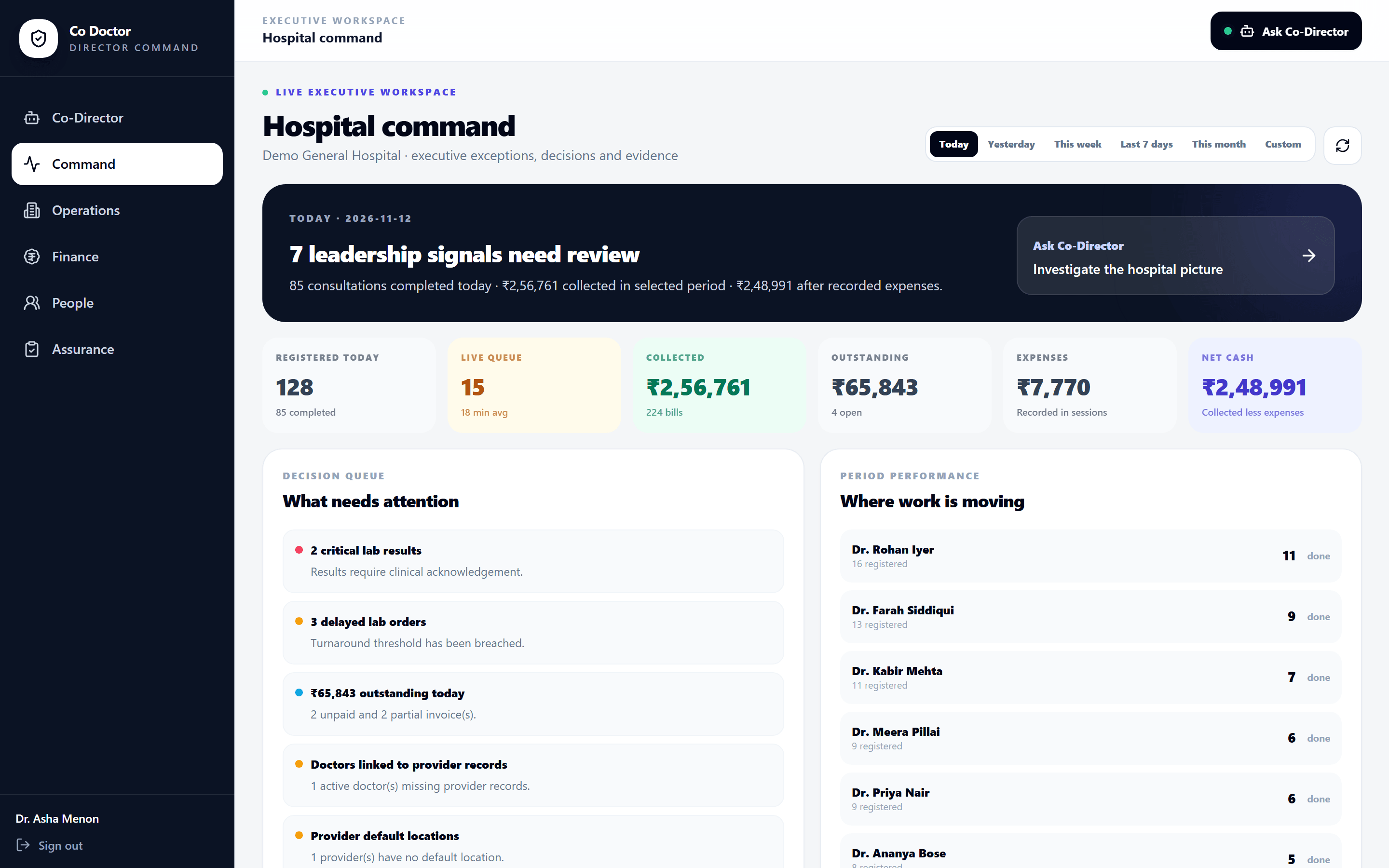
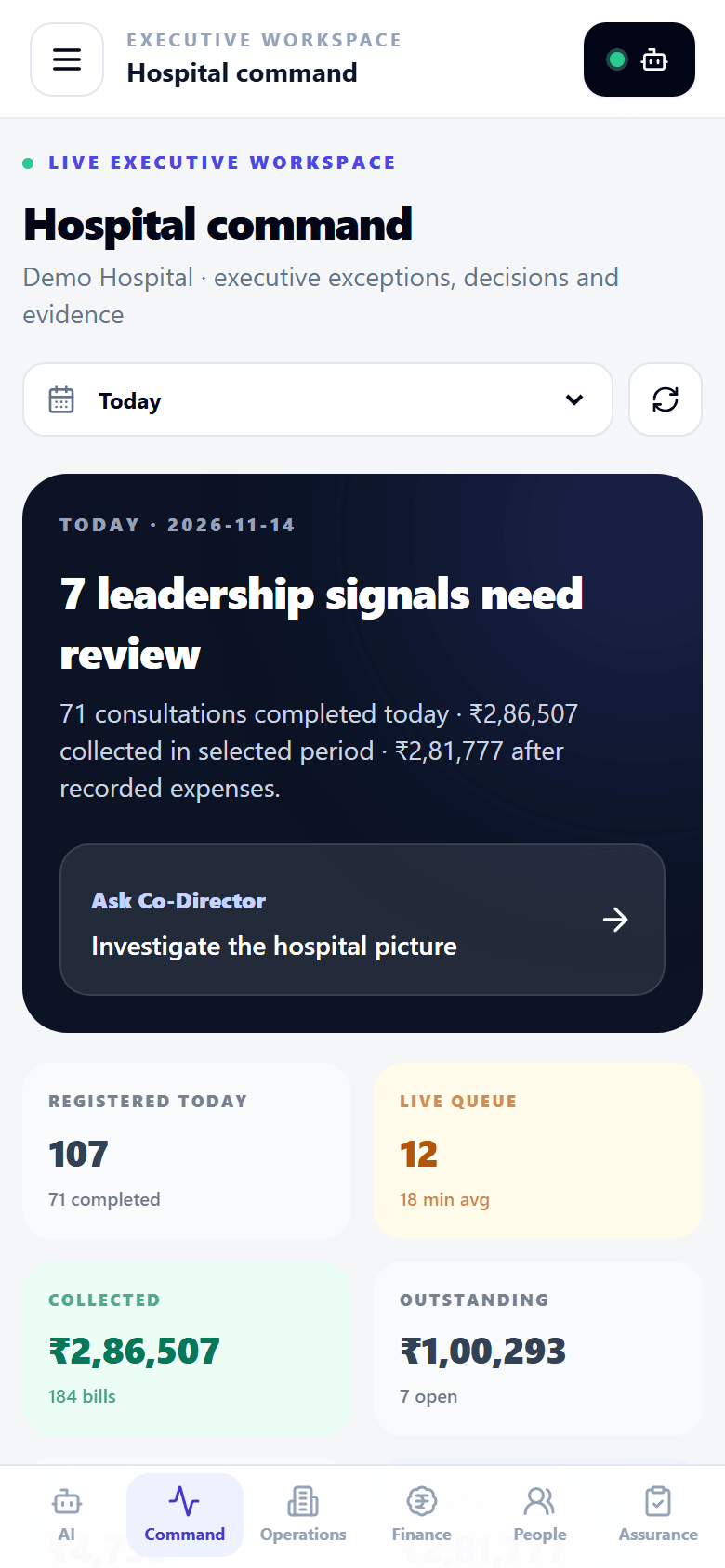
Your hospital today, as the director sees it.
Co Doctor is a hospital management system (HMS) for small and mid-size private hospitals in India. Reception, OPD, wards, lab, pharmacy, billing and the director’s dashboard work on one patient record. In the OPD, an AI junior doctor prepares each visit and drafts the prescription. A licensed doctor reviews and approves everything.1
One patient record
Registered once. Known in every room.
Every department adds to the same record, from the front desk to the follow‑up. Nobody asks the patient twice.
- 09:12Front deskRegistered. Token 4, Dr. Asha Menon.
- 09:20NurseVitals: temperature 38.1 °C, SpO₂ 96%.
- 09:22Co DoctorHistory and red flags summarised. Prescription drafted.Draft
- 09:31DoctorReviewed, edited one dose, approved.Approved by the doctor
- 09:31LabCBC, CRP and chest X‑ray ordered.
- 09:31PharmacyFive medicines ready to dispense.
- 09:31PatientPrescription and review date on WhatsApp.
- 09:40BillingBill settled by UPI.
- Day 3PatientChecked in on WhatsApp: feeling better.
Every role
A screen for every job.
Each person opens to their own work, on the same patient. One system to run, train and pay for.
- About96
- working screens
- About15
- staff roles
- Just1
- patient record
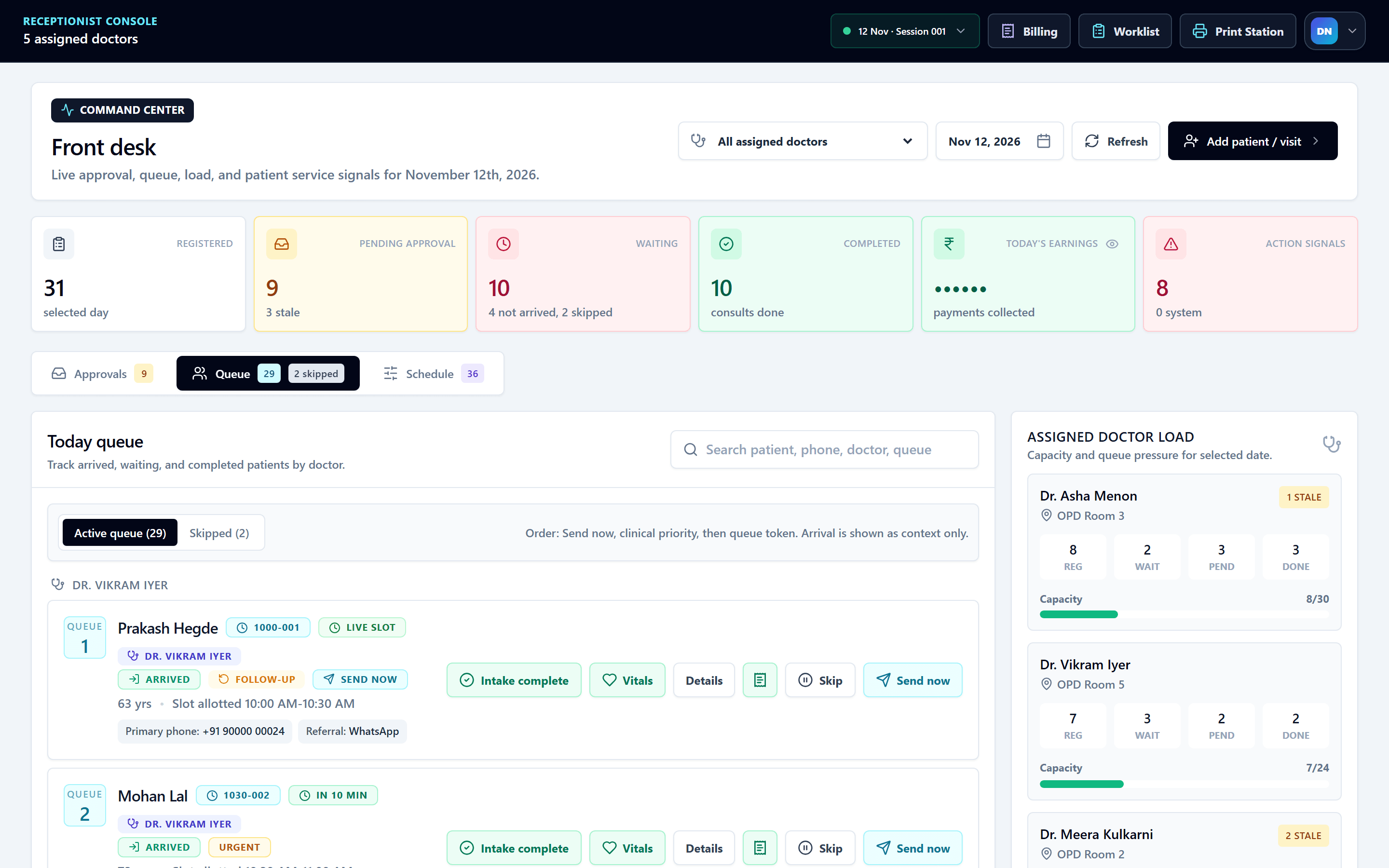
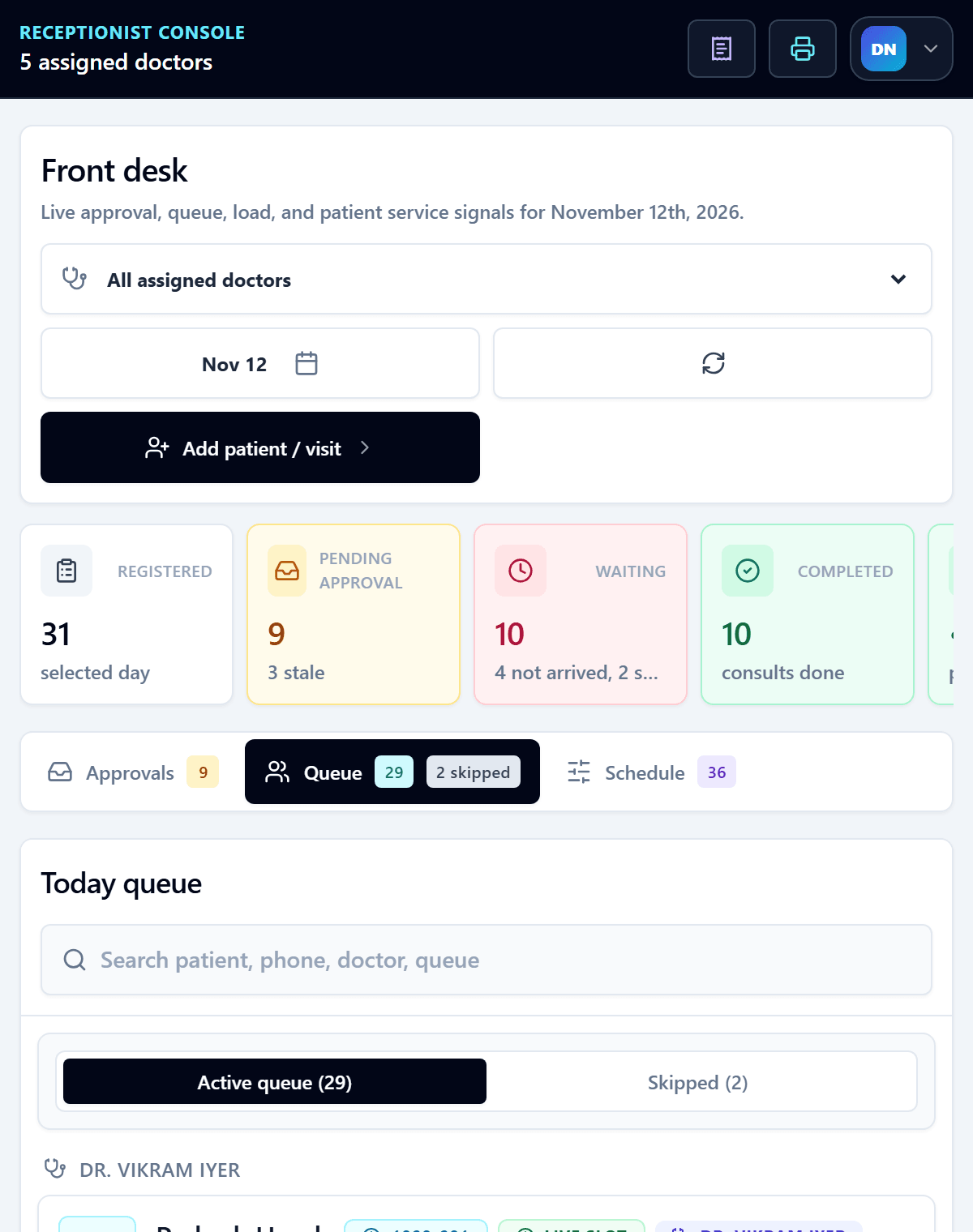
Front deskRegistration, the queue and each doctor’s load. 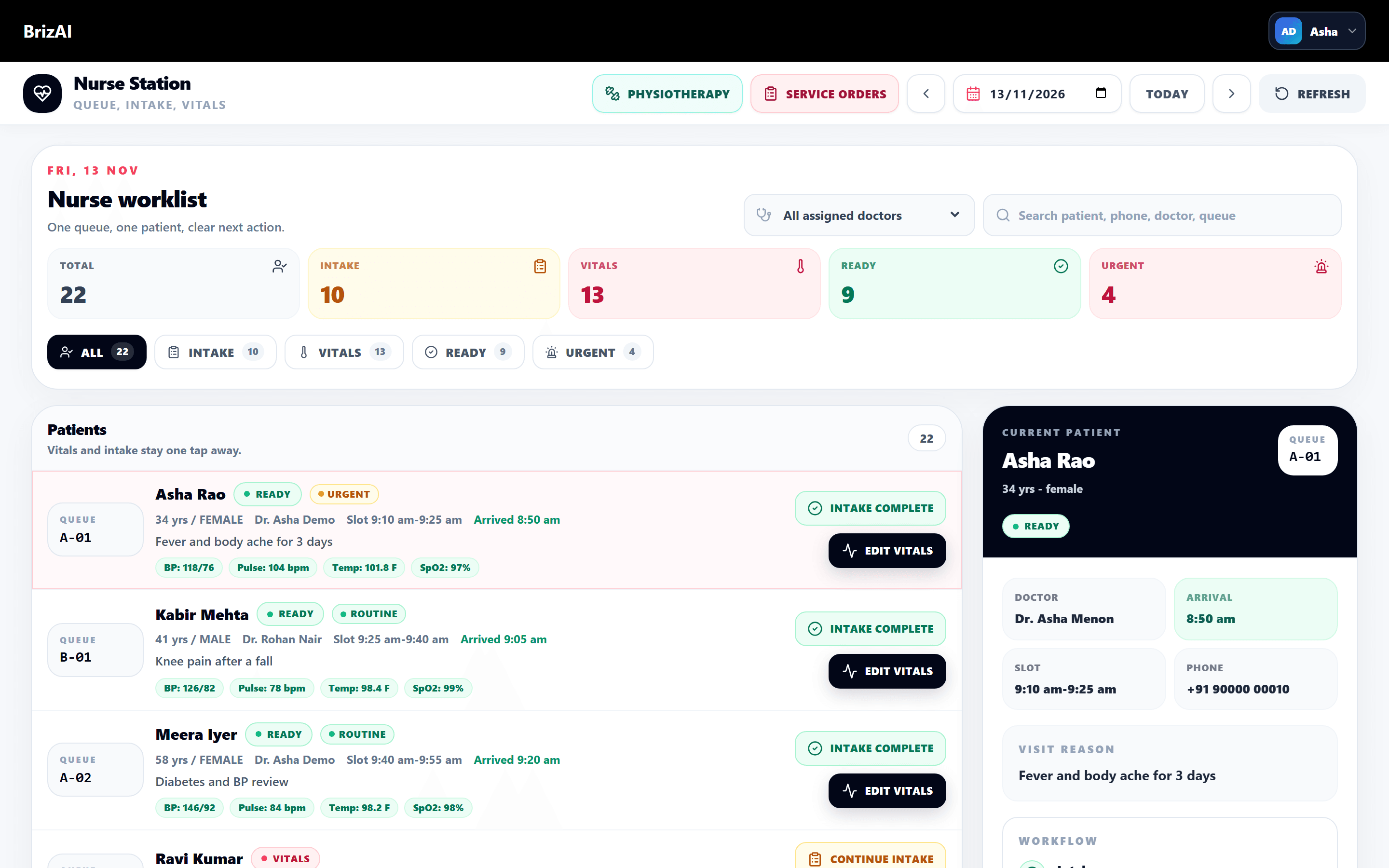
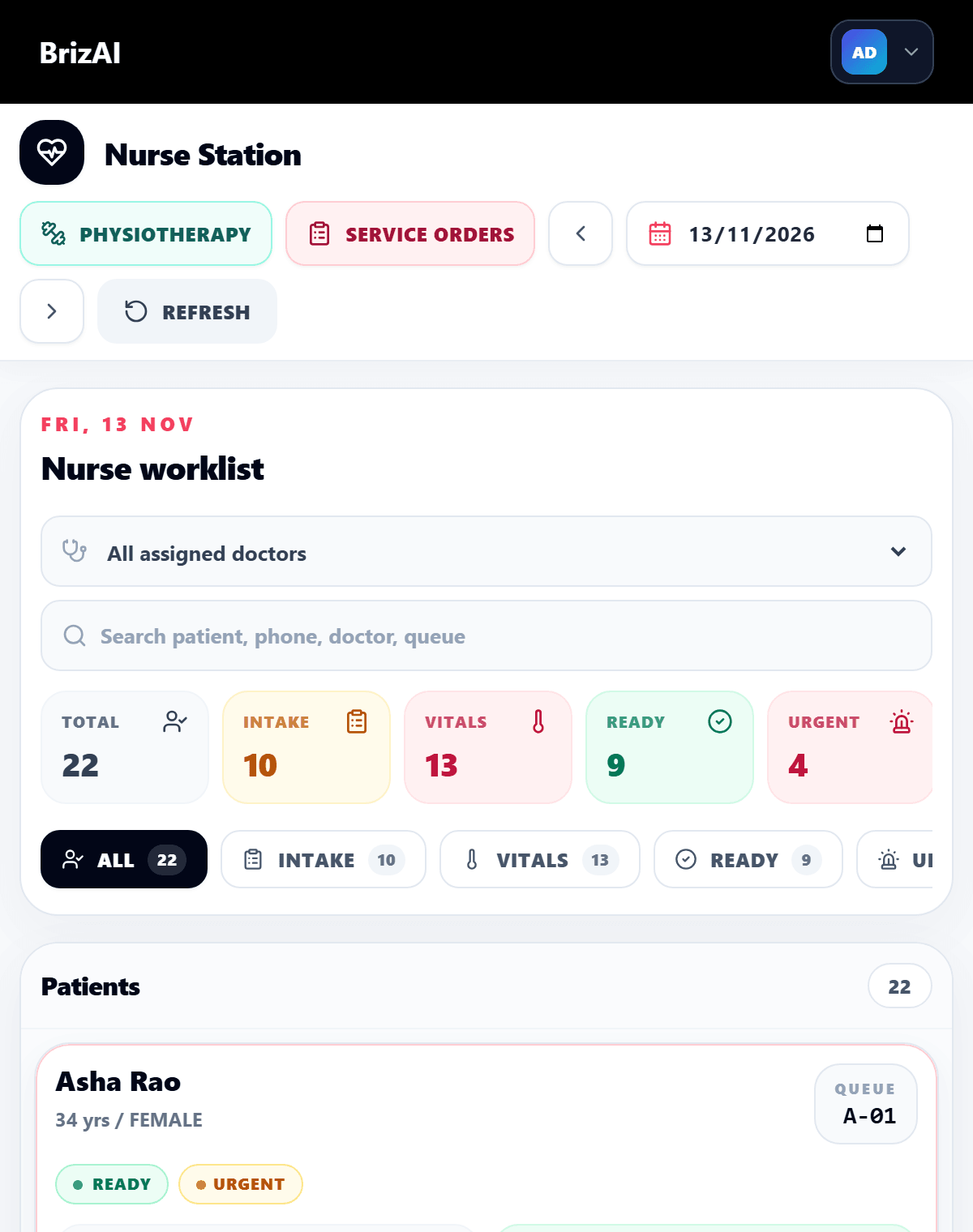
NurseIntake and vitals, one worklist. 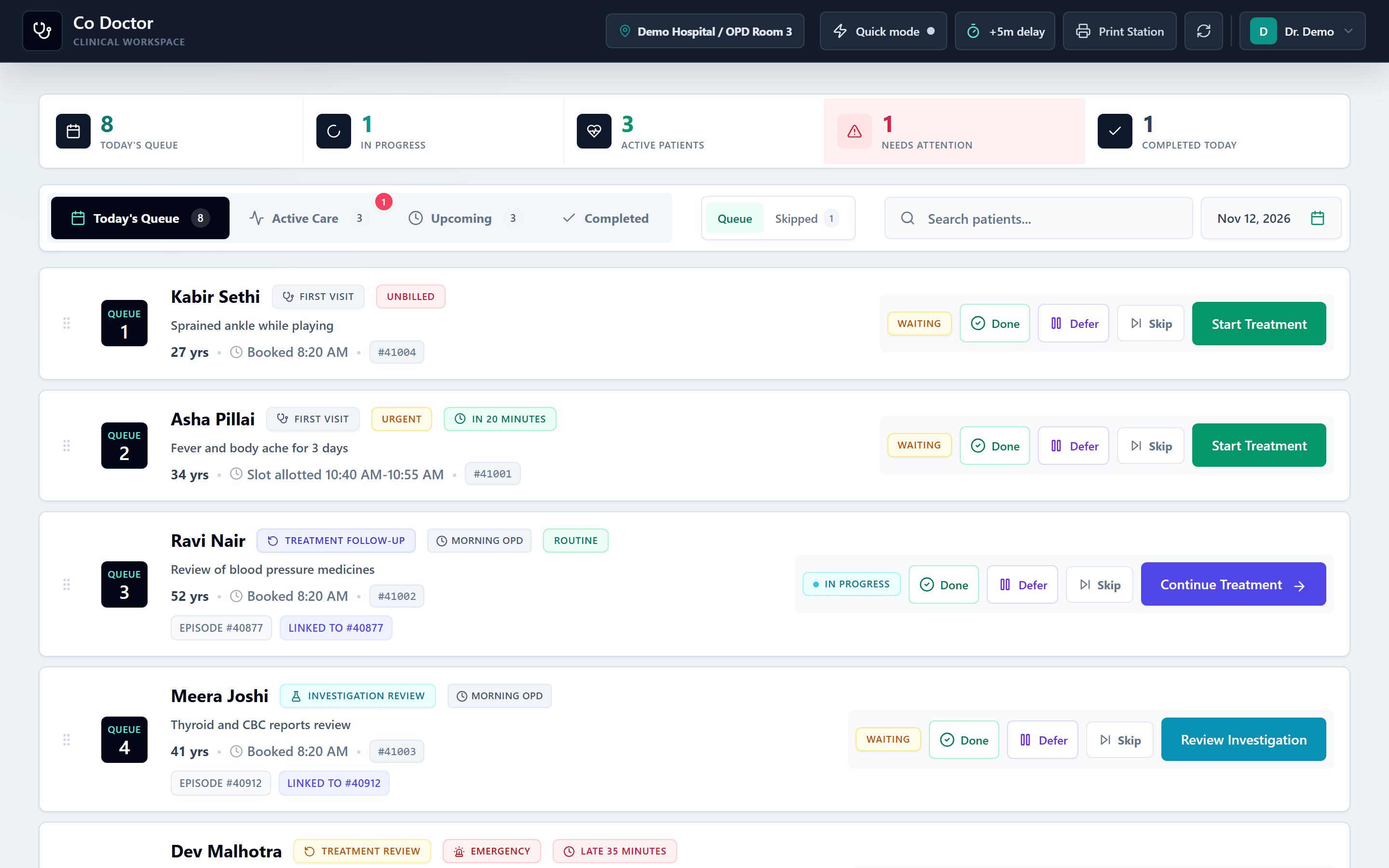
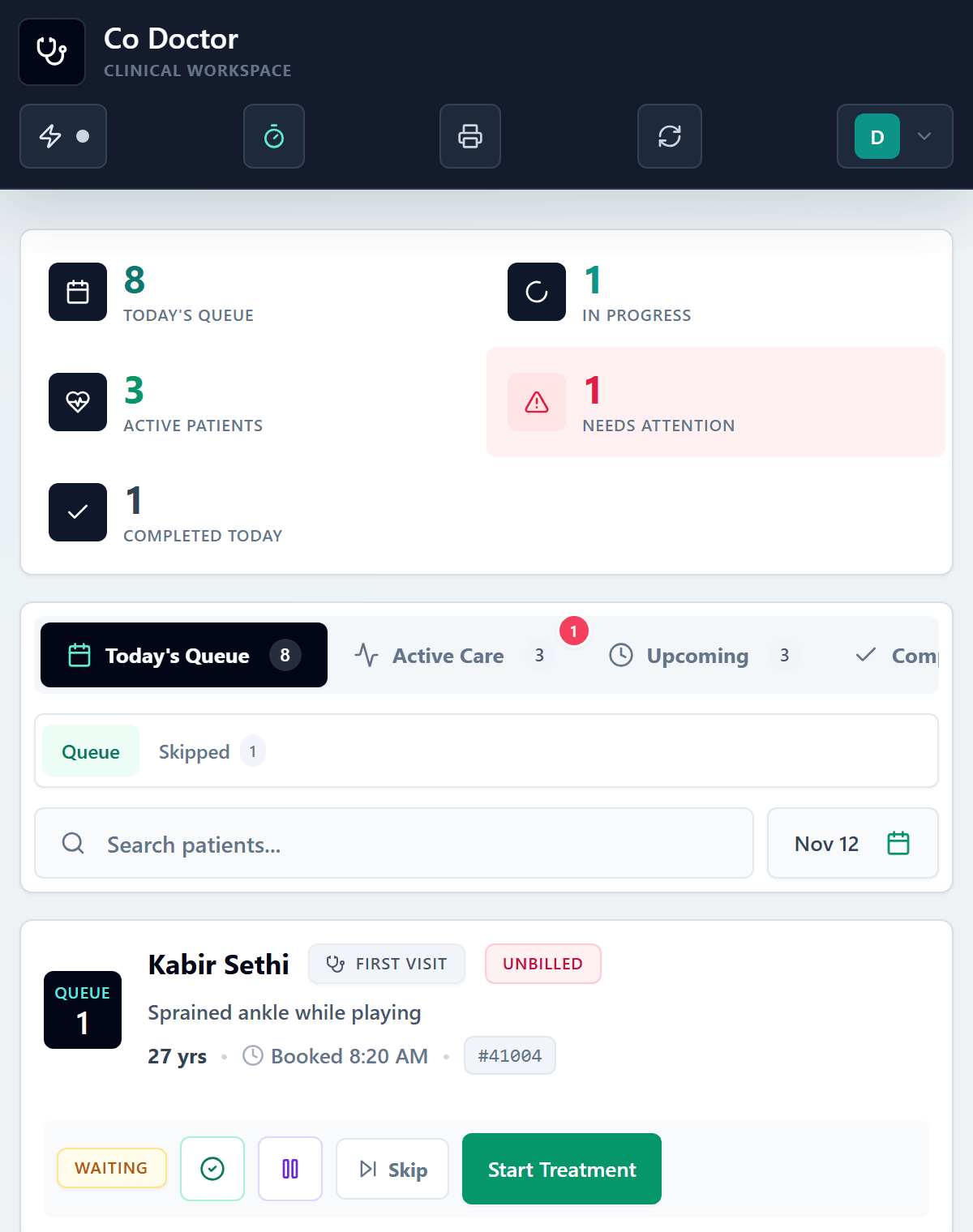
DoctorToday’s patients, each one prepared. 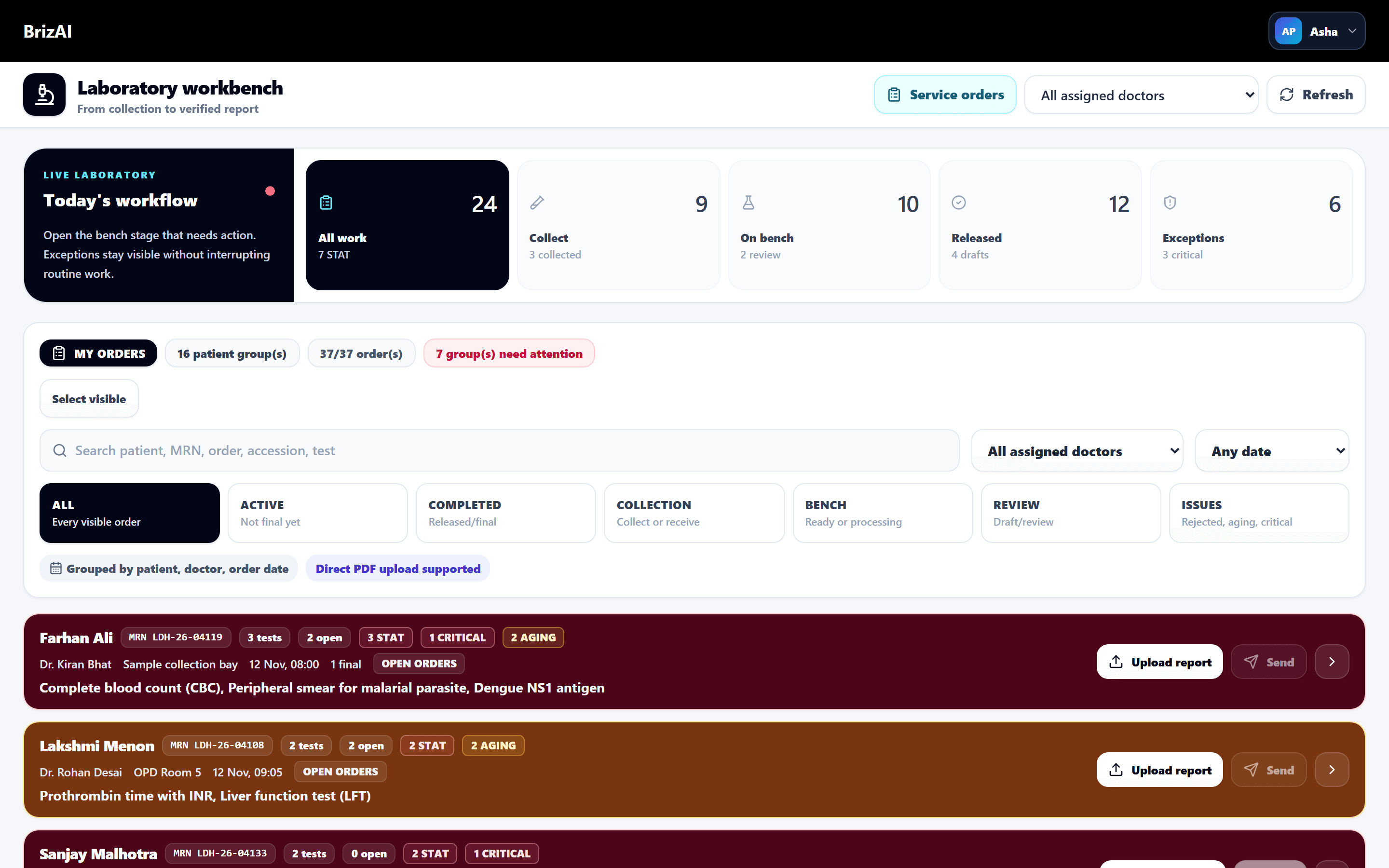
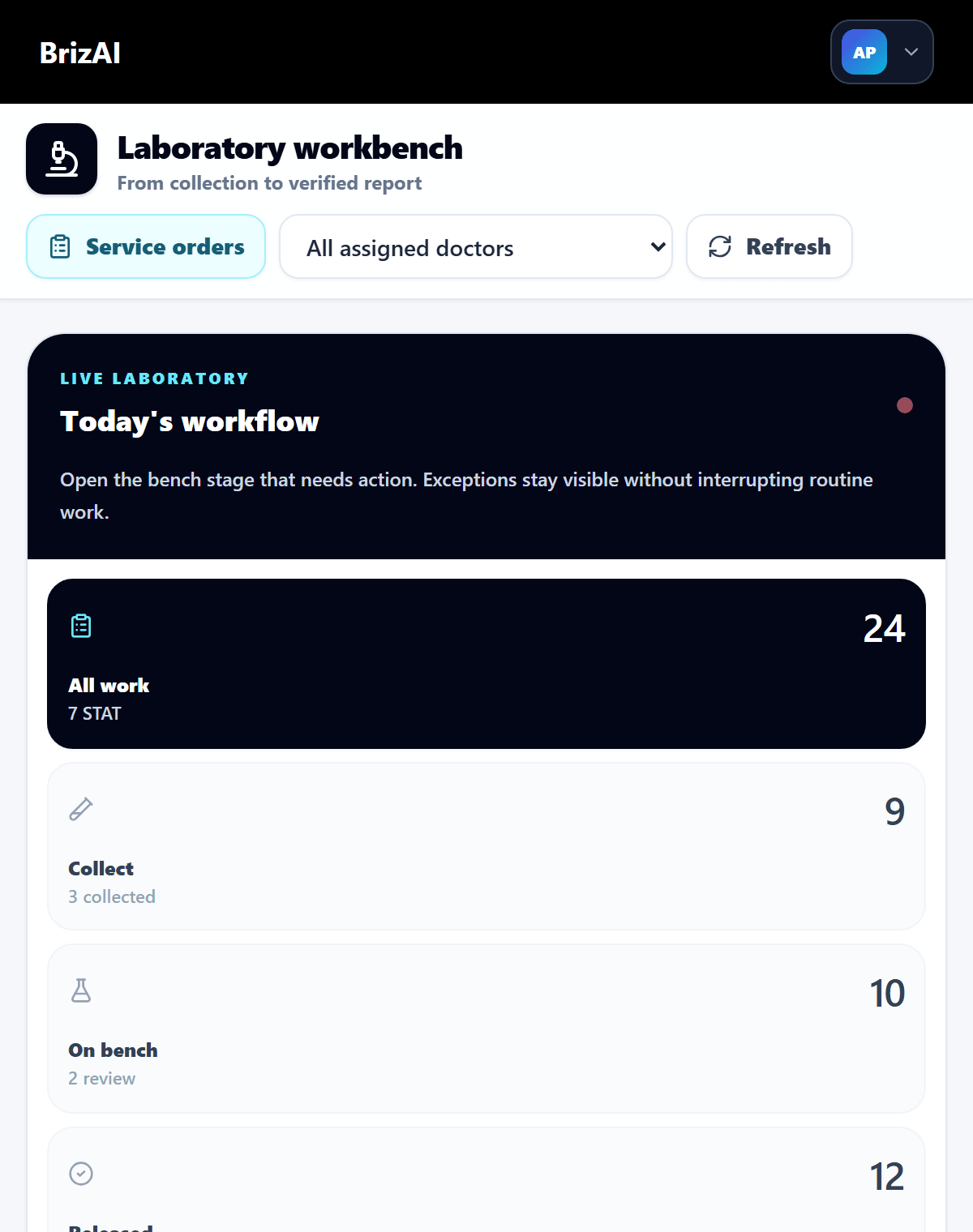
LabFrom sample to verified report. 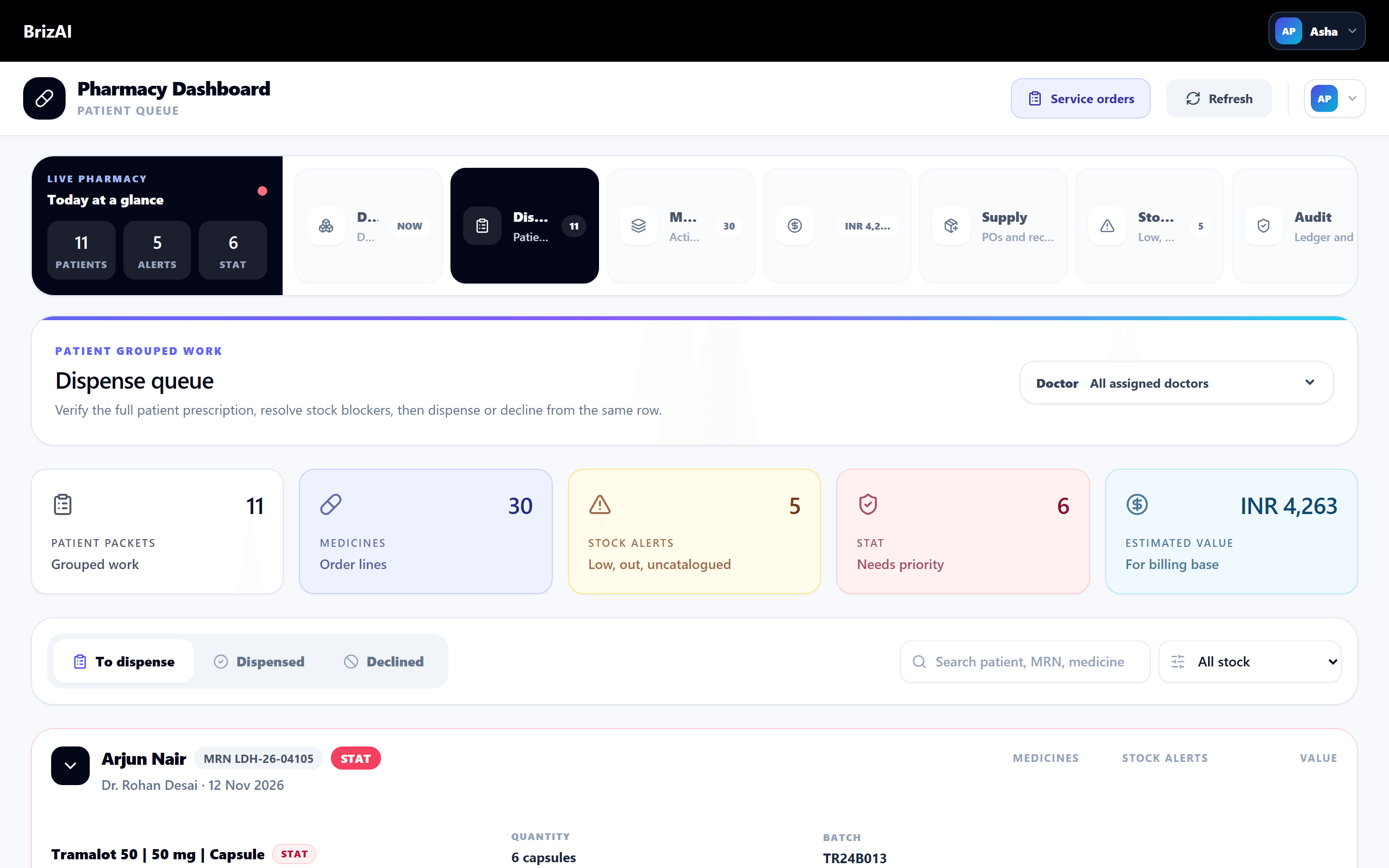
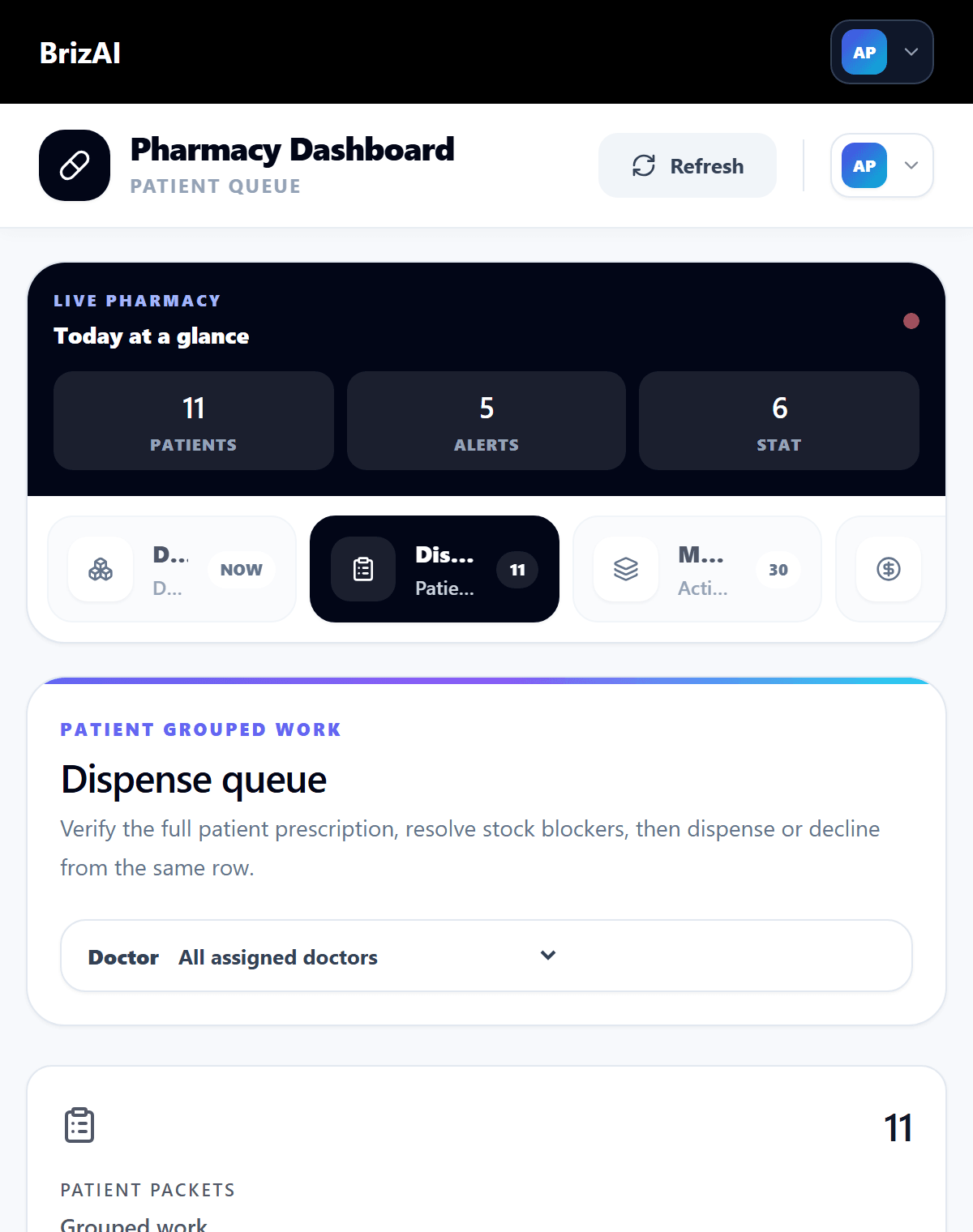
PharmacyThe approved prescription, ready to dispense. 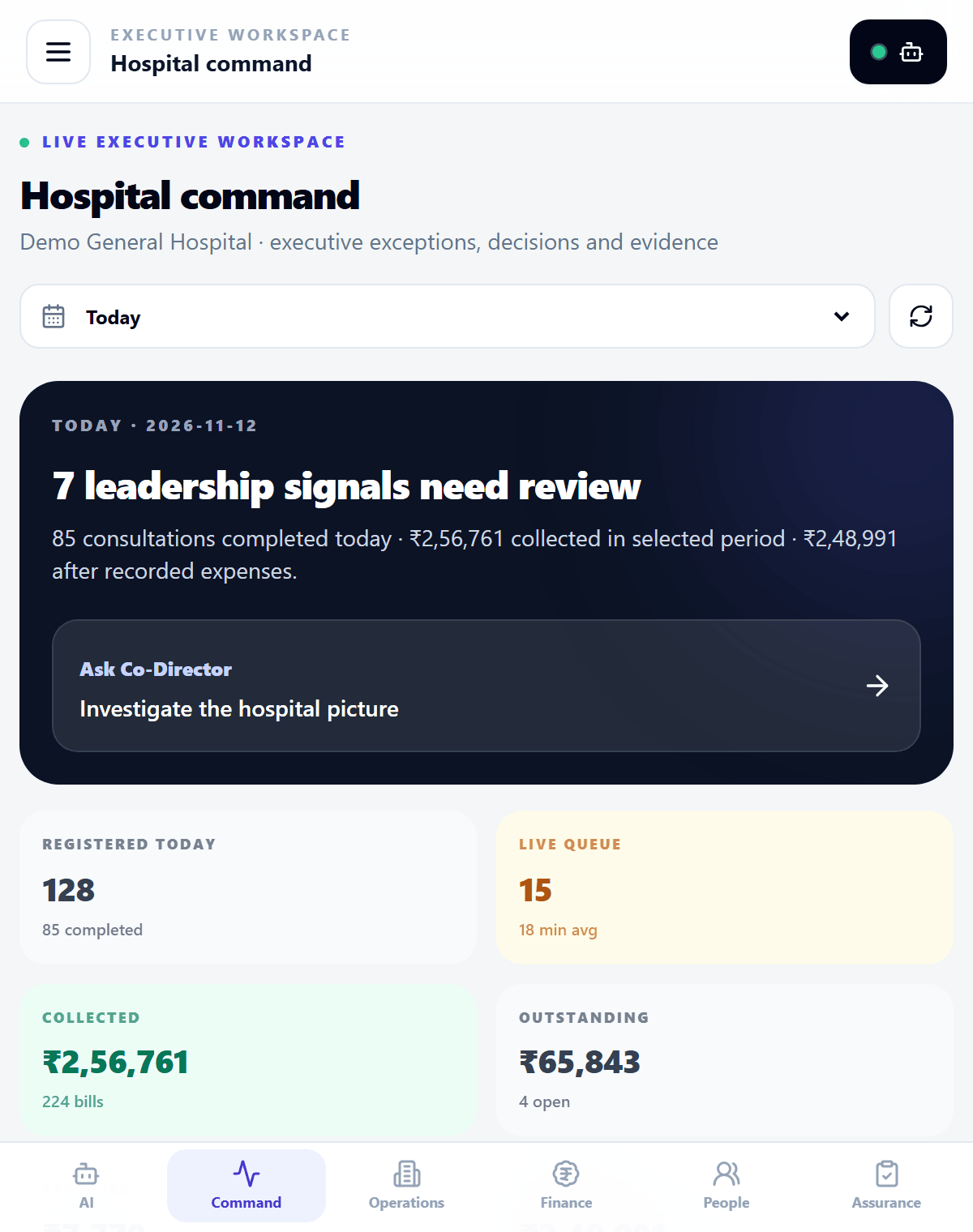
DirectorThe whole hospital, today. 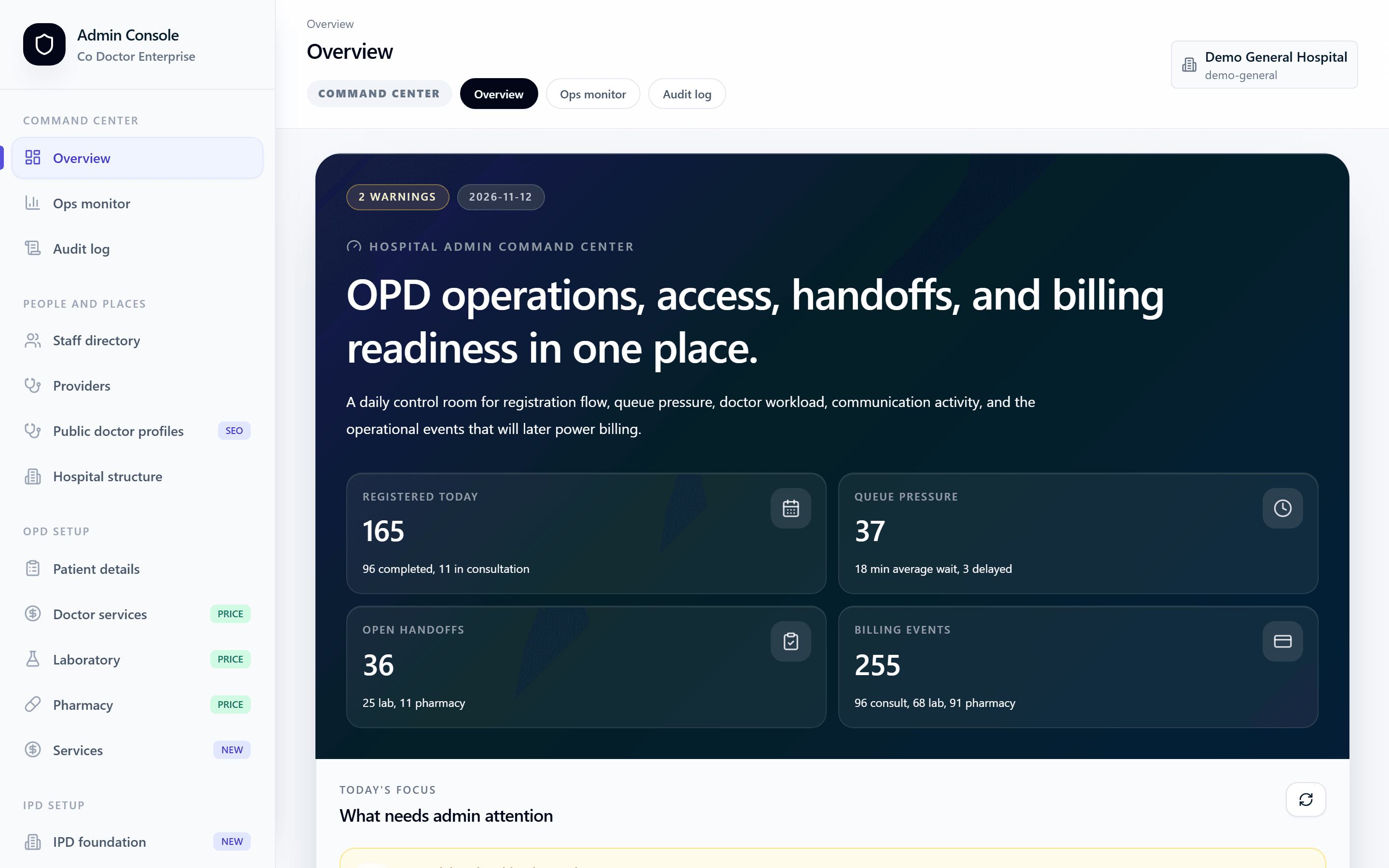
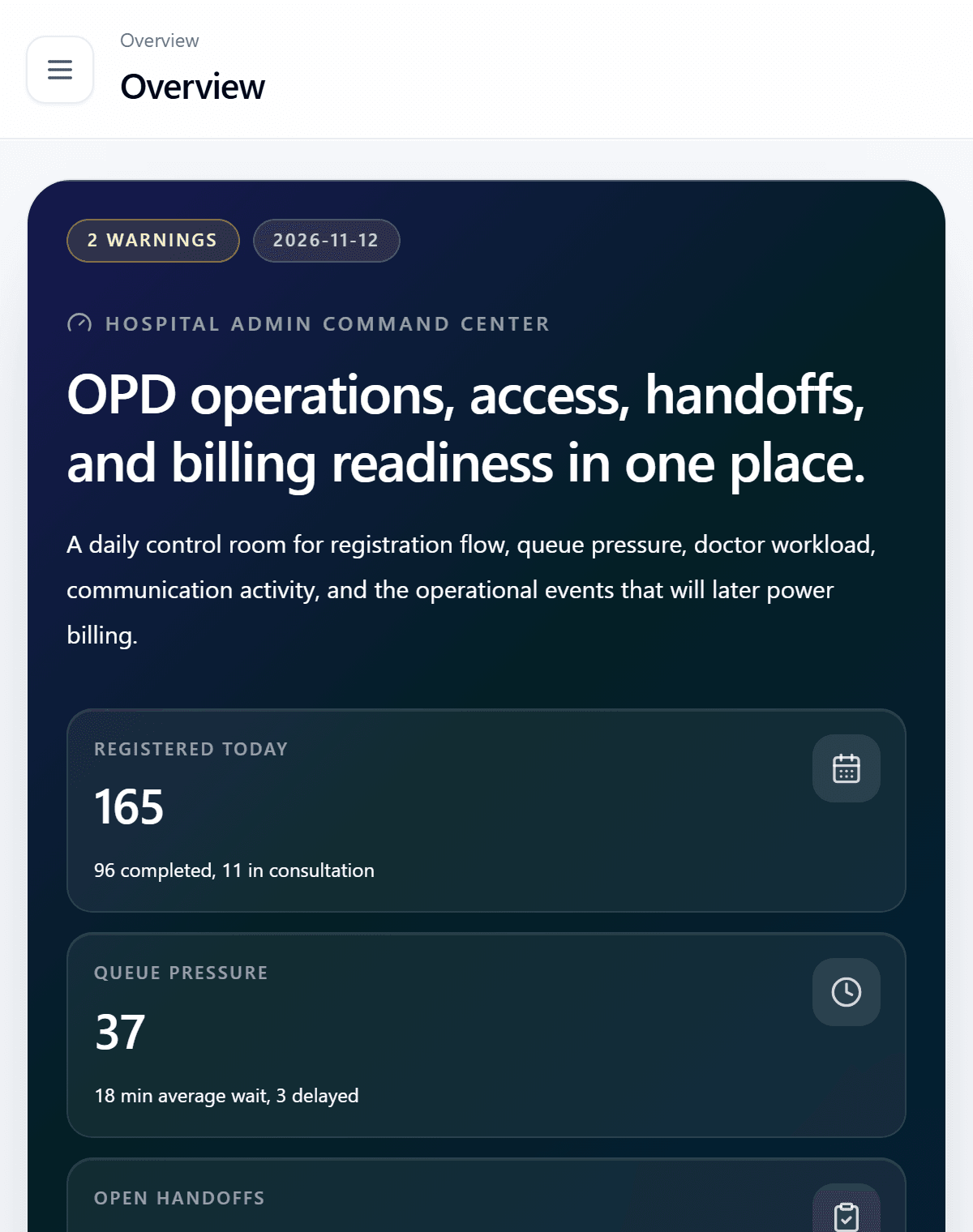
AdminSetup, access and operations.
In the OPD
It drafts. Your doctors decide.
Before each patient sits down, the history is taken and the prescription is drafted in that doctor’s own style. Nothing reaches a patient until the doctor approves it.
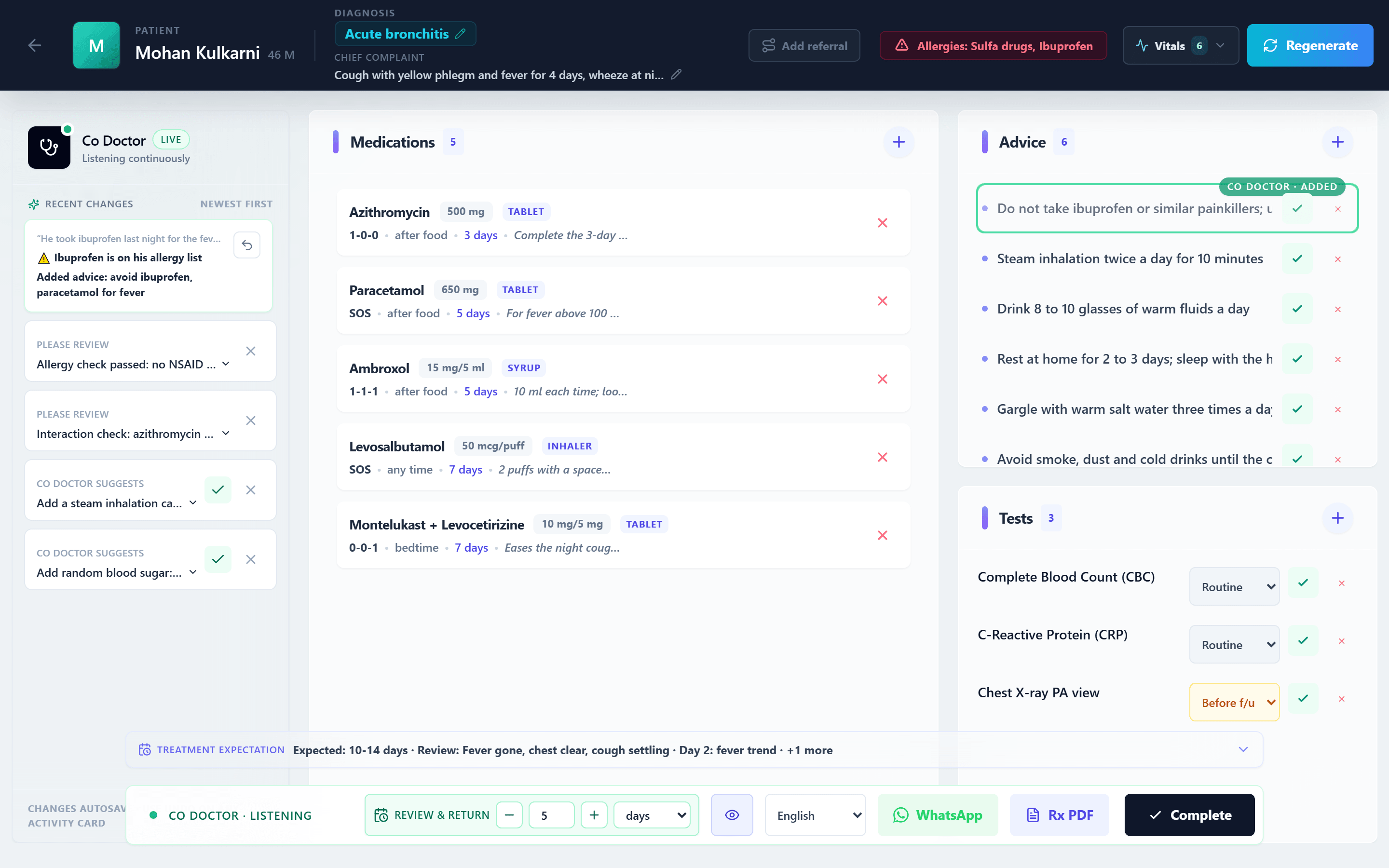
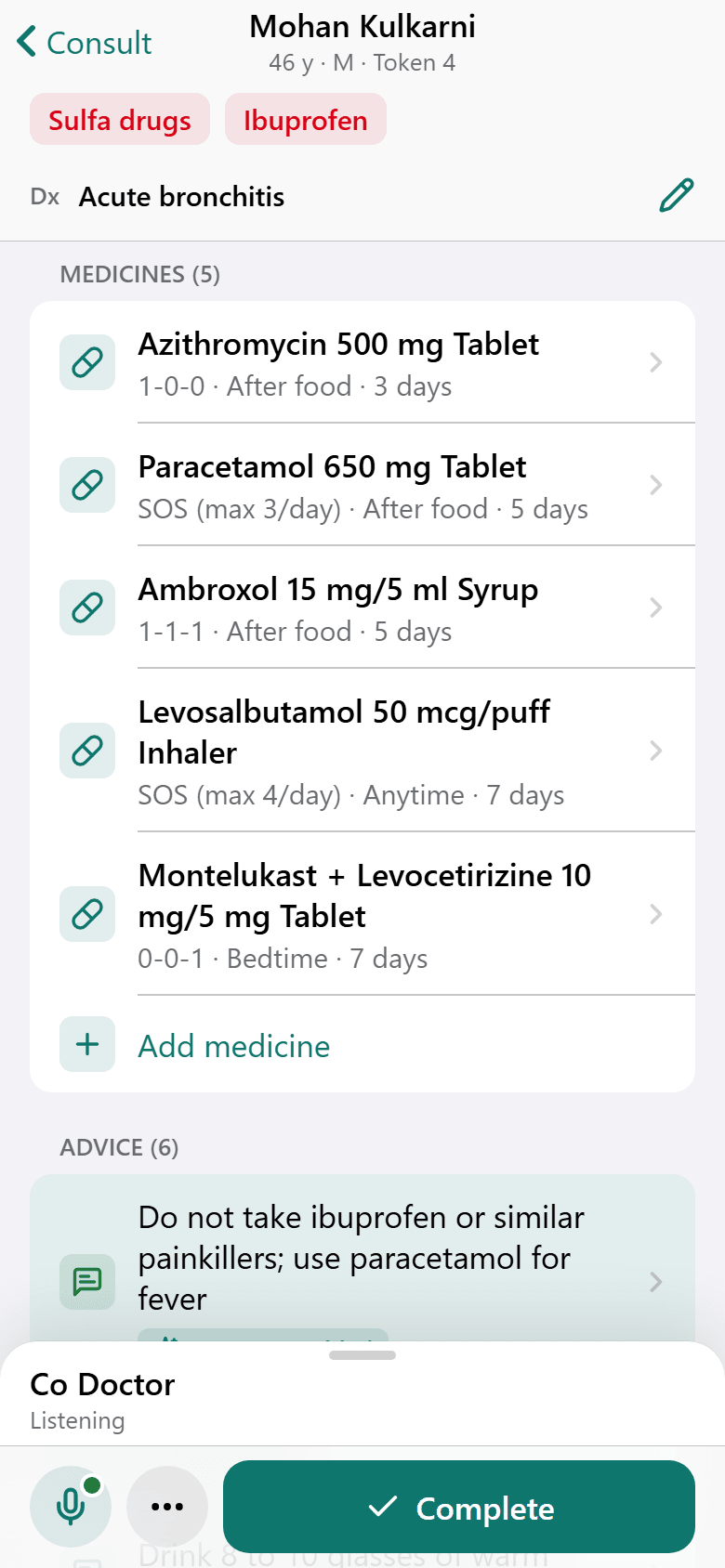
One tap on Complete, and the lab, the pharmacy and the patient each get their part.
OPD management softwareInpatient (IPD)
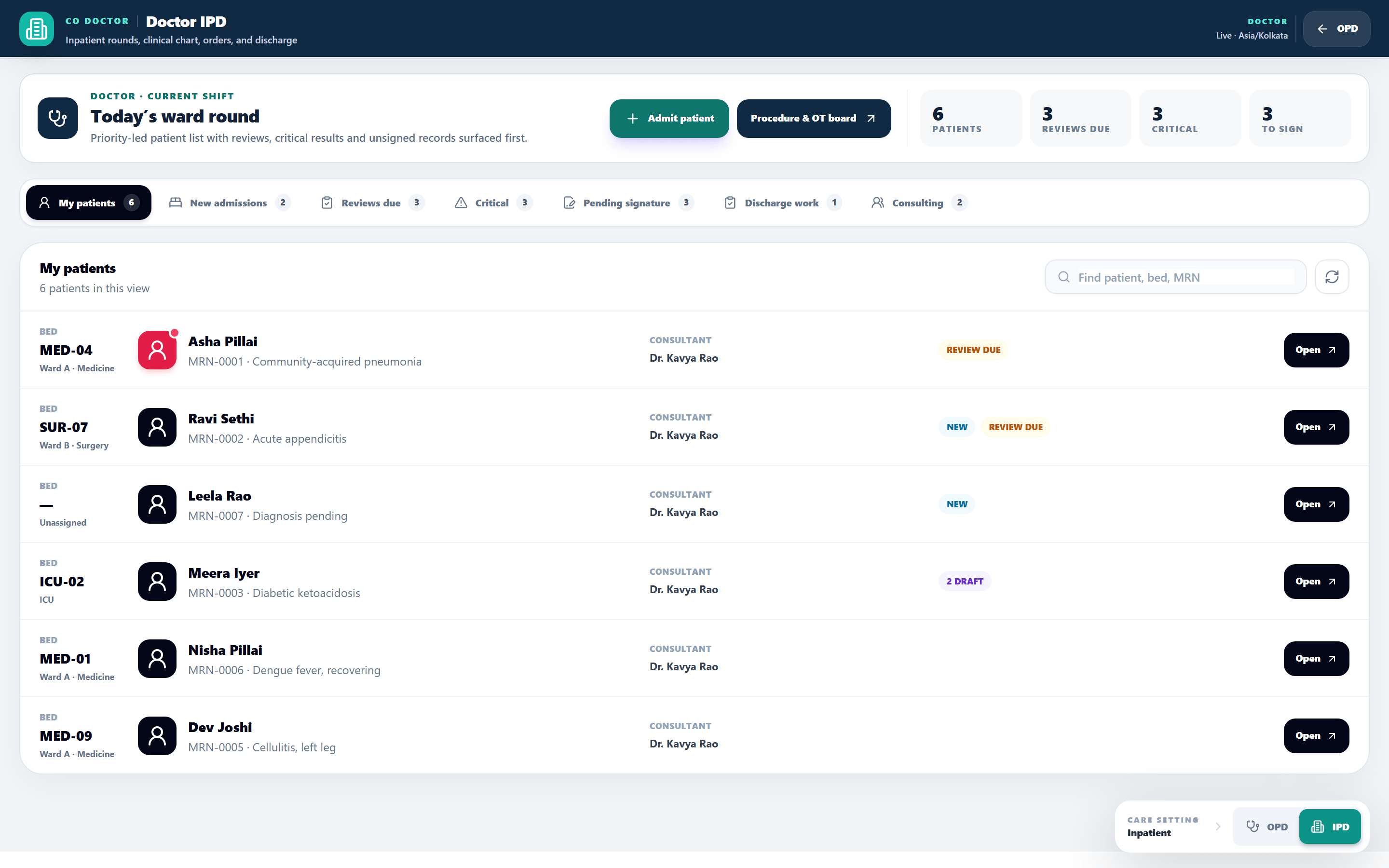
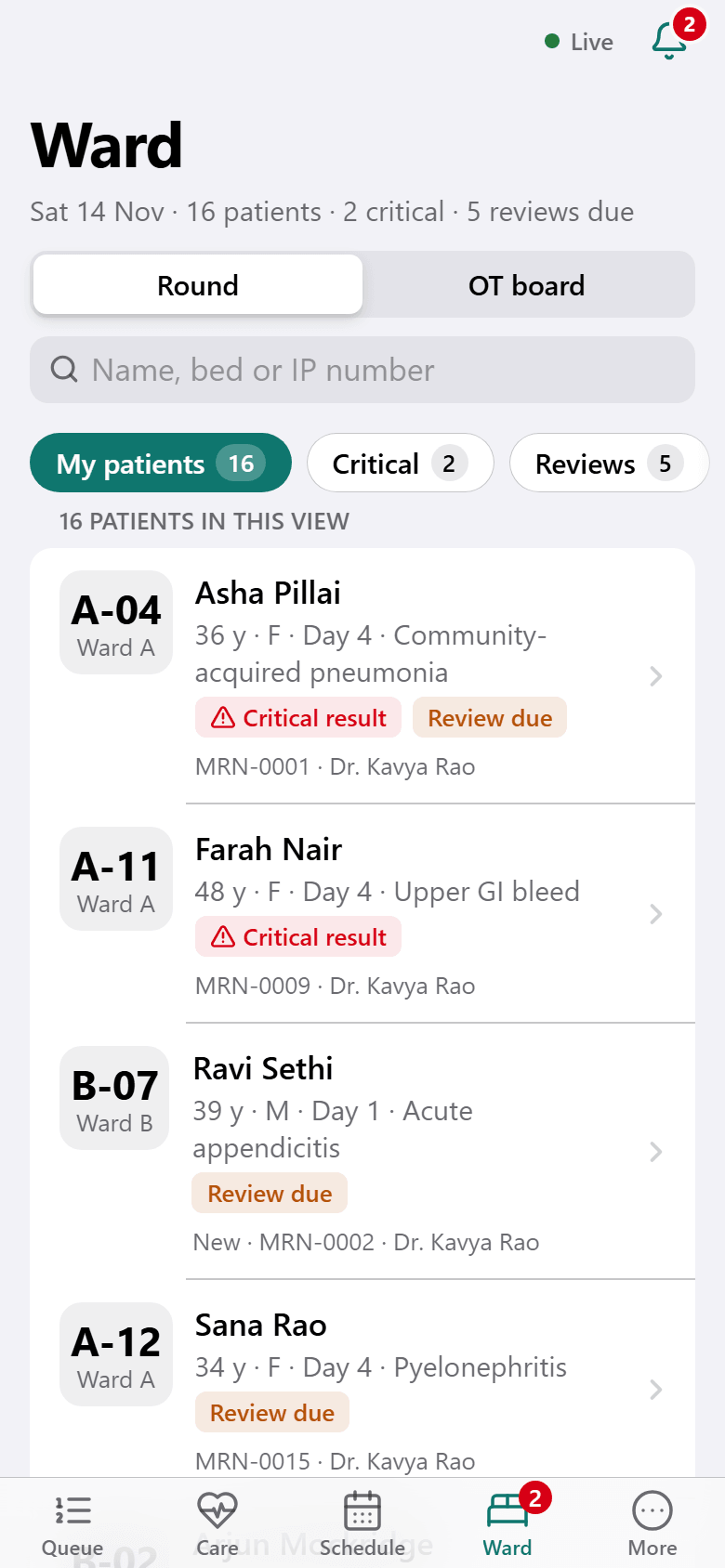
Admission to discharge, on the same record.
Ward rounds, the patient chart and discharge planning pick up where the OPD left off. Admission never means starting over.
Patient chart
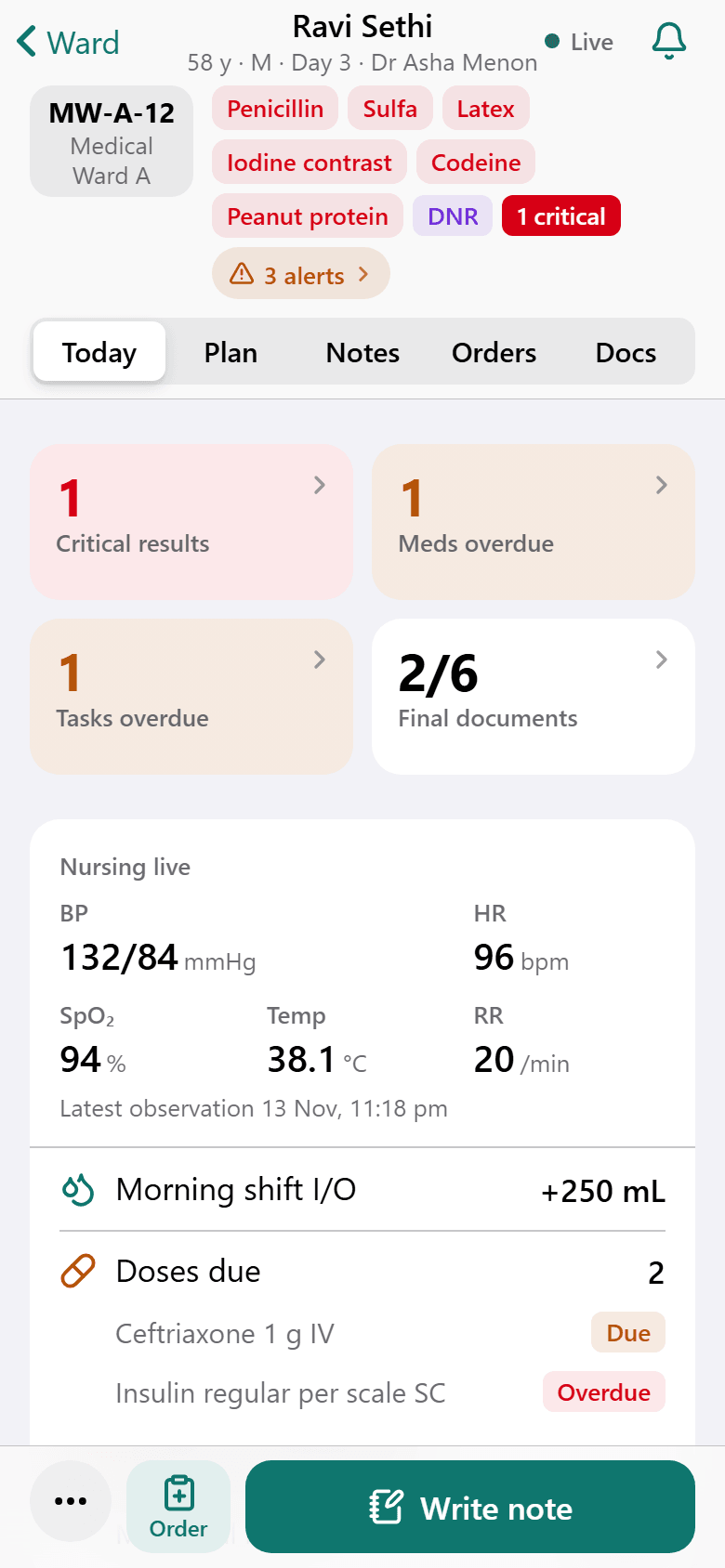
The whole stay, on one chart.
Allergies, alerts, orders, medicines due and nursing’s latest vitals, on the doctor’s phone at the bedside.
Discharge
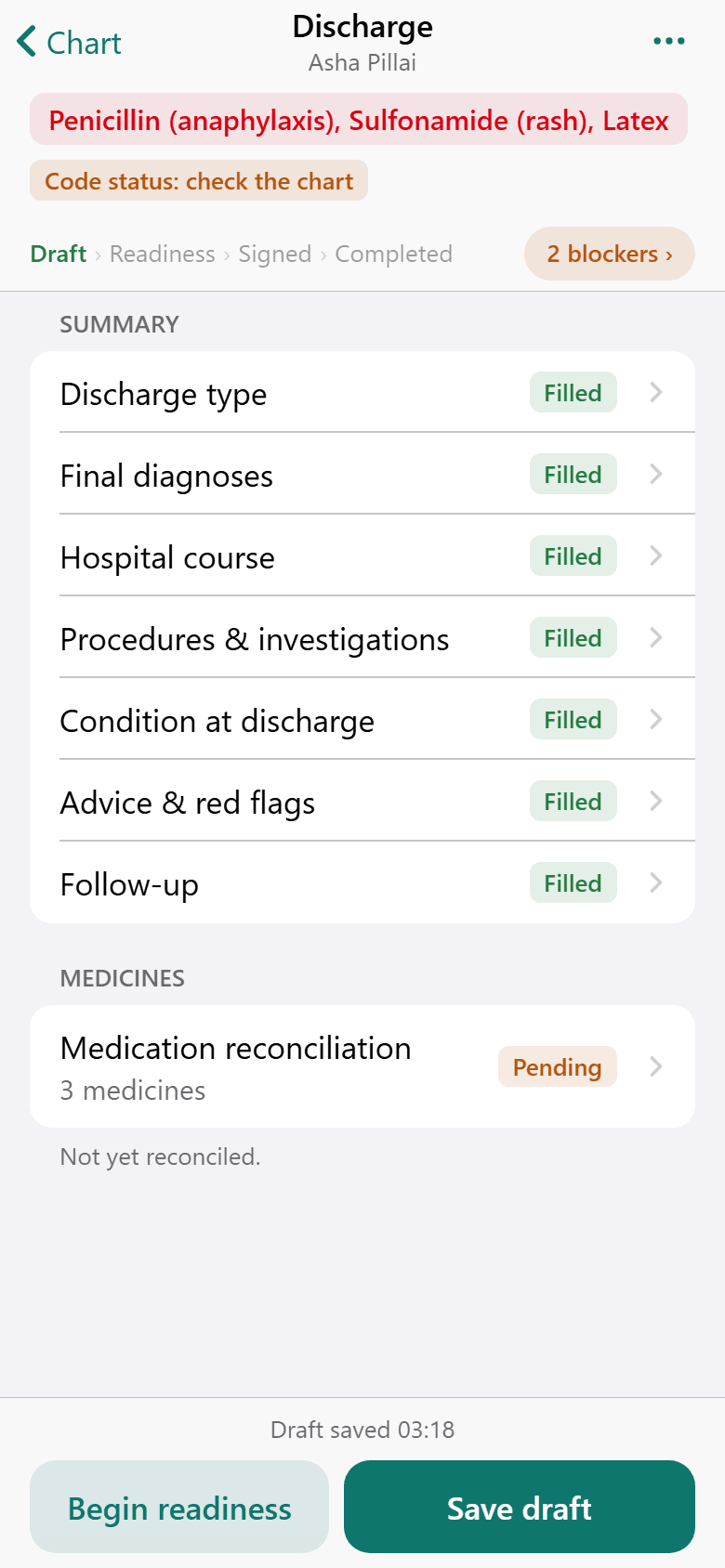
Every department signs off.
Clinical, nursing, pharmacy and billing each clear the patient. Anything still pending shows as a blocker.
Hospital billing
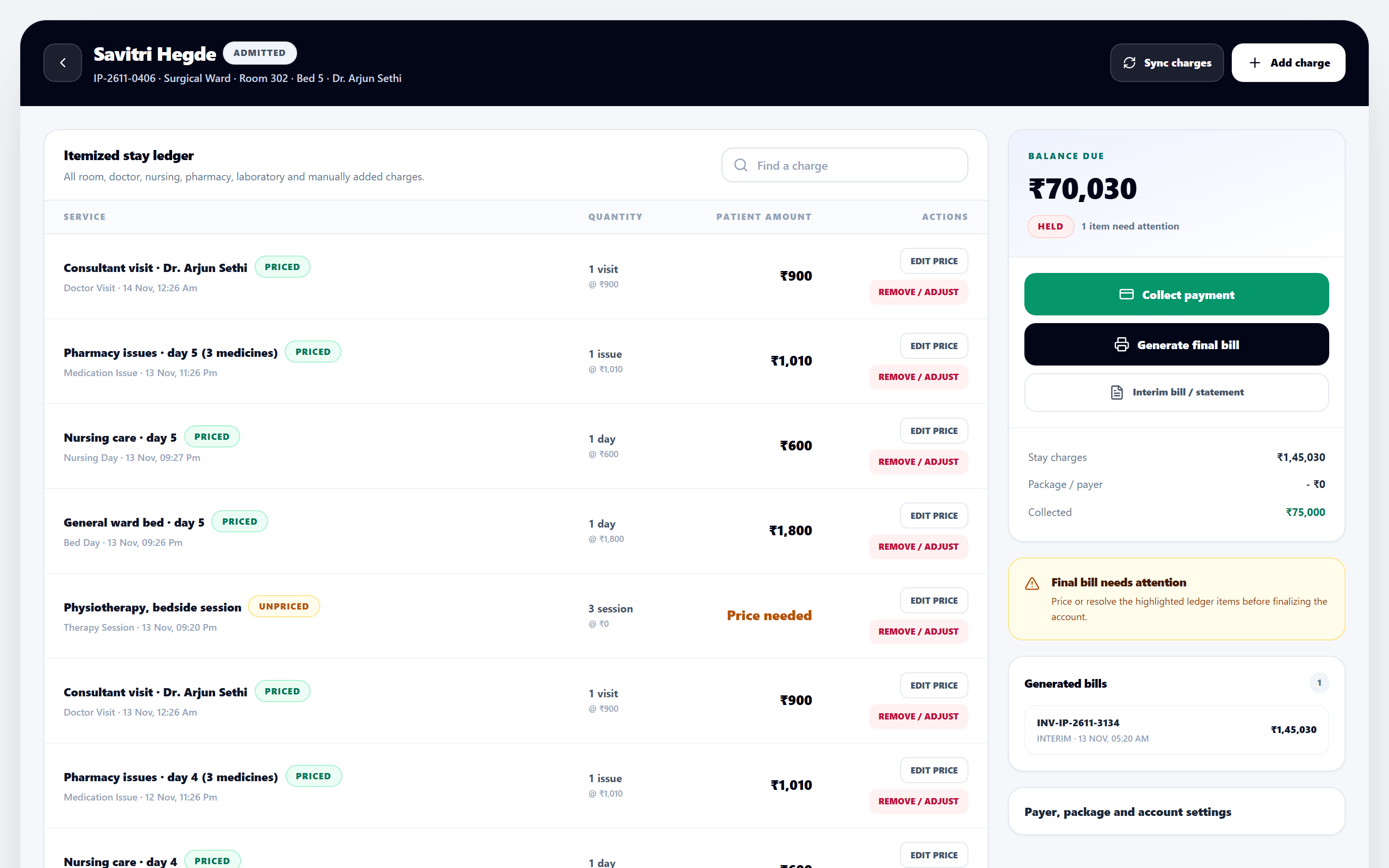
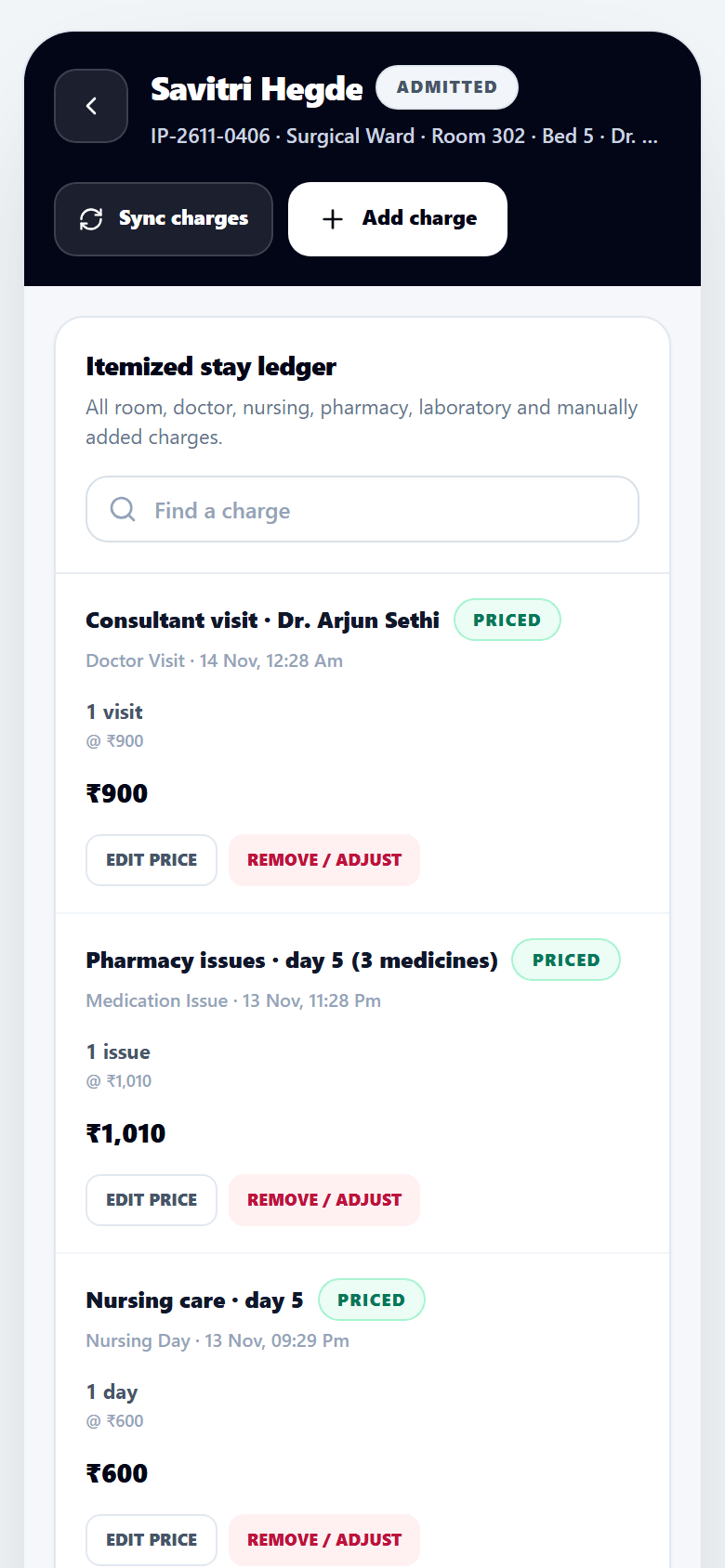
One bill for the whole stay.
Room, doctor, nursing, pharmacy and lab charges collect on one itemised ledger, day by day. Nobody adds it up at discharge.
OPD bills at the front desk.
Cash, UPI or card, with each cash session closed and counted.
Statements during the stay.
An interim bill on any day, and the final bill at discharge.
Nothing leaves unpriced.
A charge with no price is flagged, and it holds the final bill until someone resolves it.
Director’s dashboard
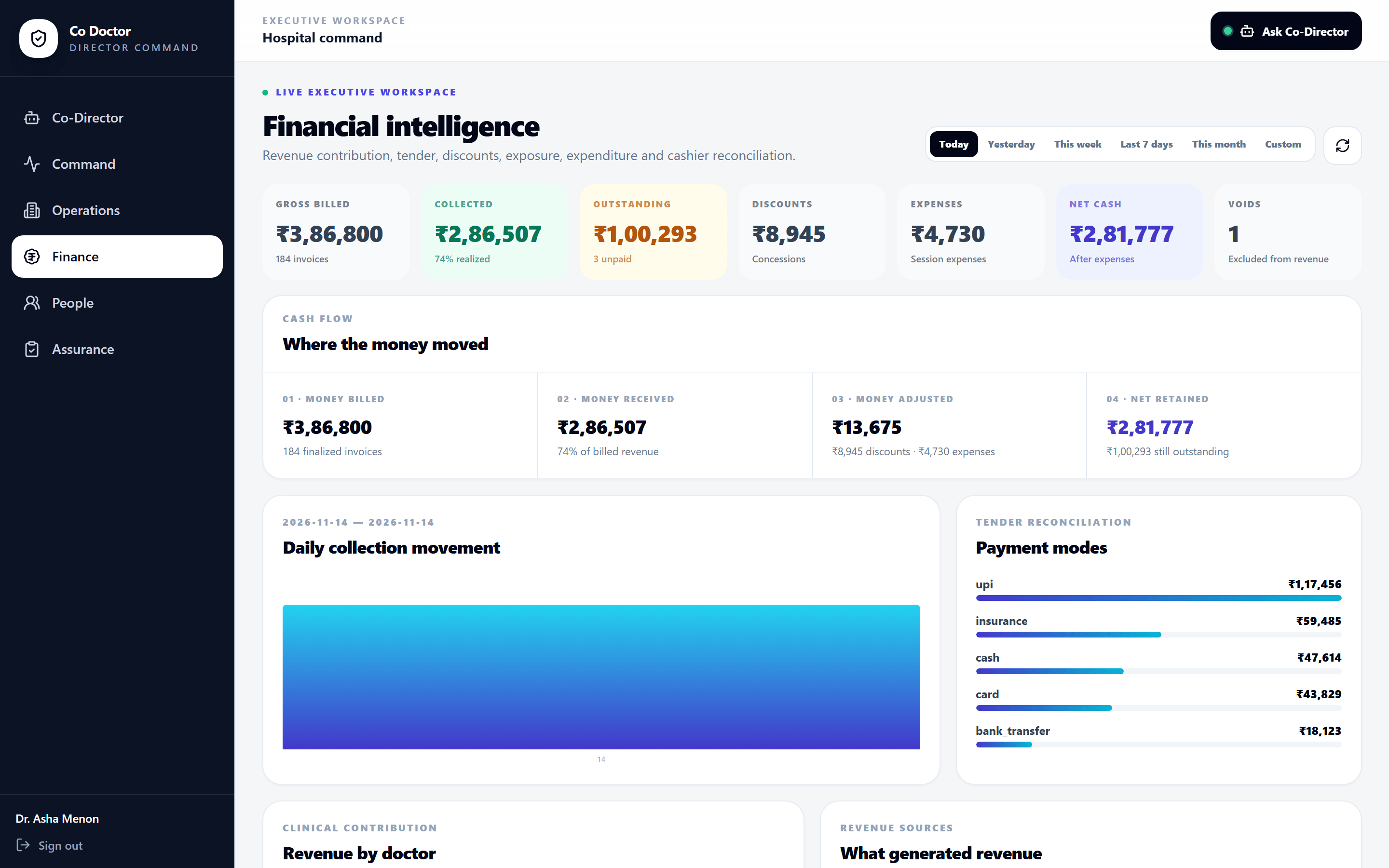
The whole hospital, as it happens.
Consultations, the live queue, collections, what is outstanding and what needs your decision. No report to wait for.
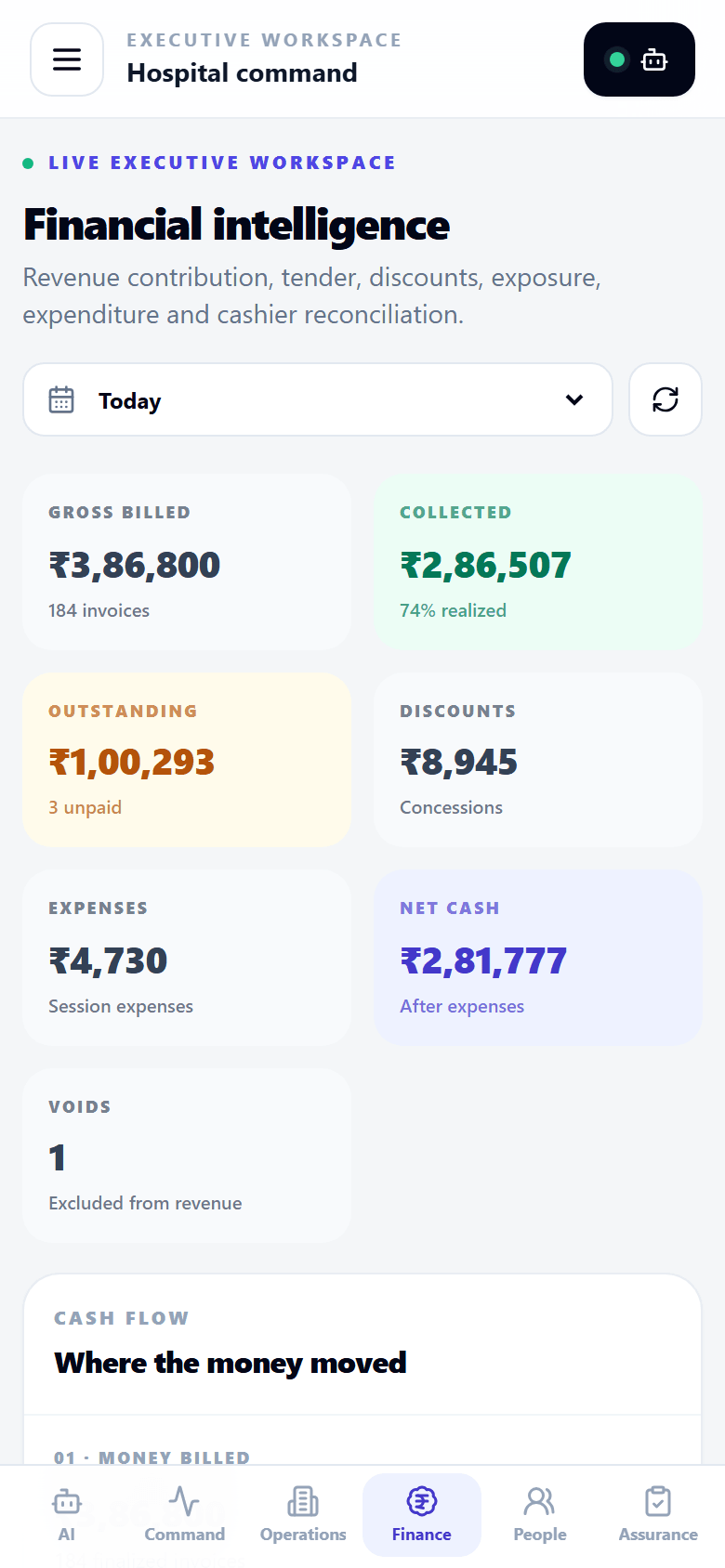
What needs you.
Critical results, delayed lab orders and unpaid bills come to the top.
Where the money moved.
Billed, collected, discounts, expenses and net cash, by payment mode.
How each doctor’s day is going.
Patients registered and seen, doctor by doctor.
Admin and roles
Your hospital, set up your way.
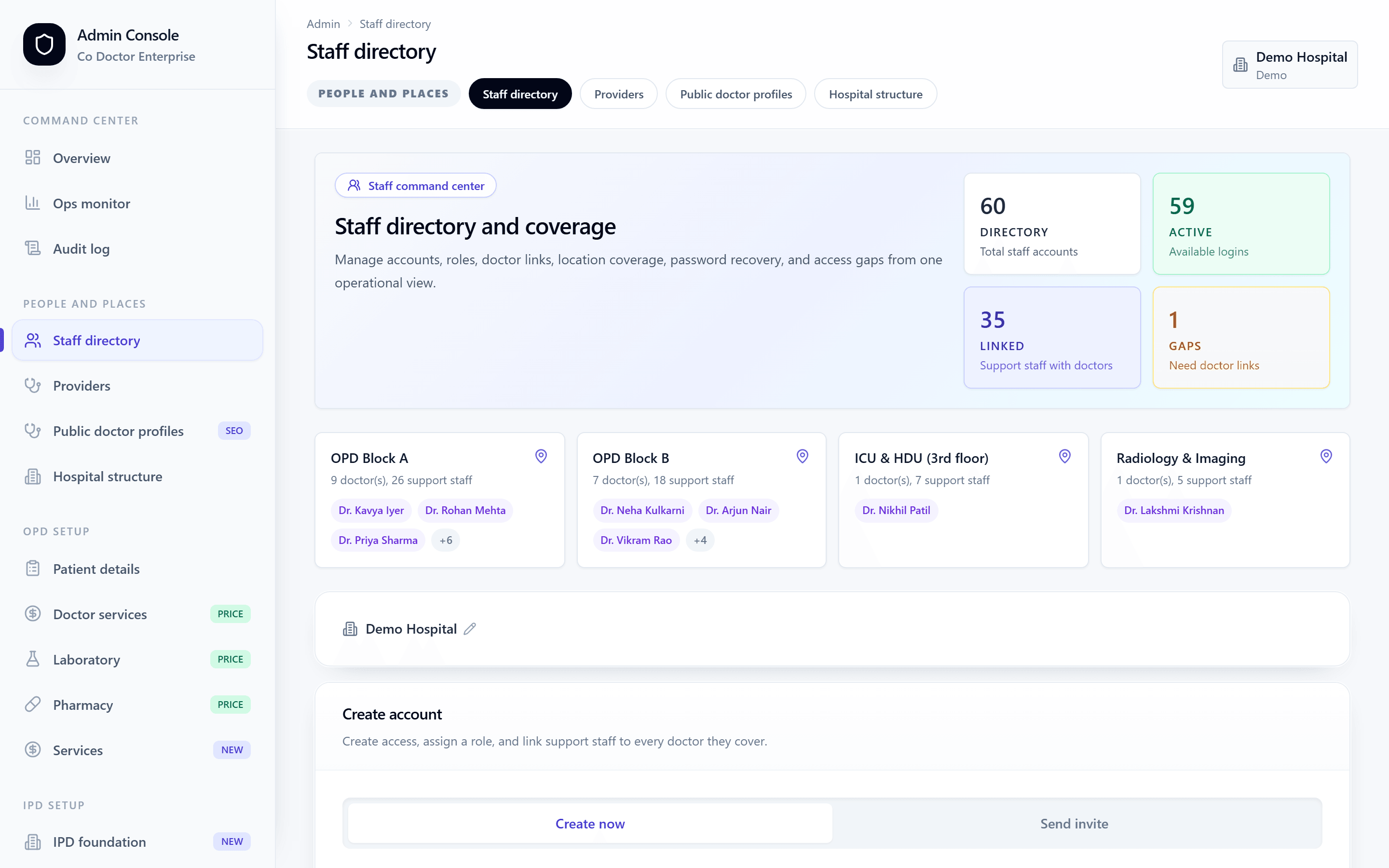
Admins give each person an account and a role, and link staff to the doctors they cover. Every change stays on record.
Staff and roles
Everyone sees what their job needs.
Accounts, roles, doctor links and coverage by location, in one directory.
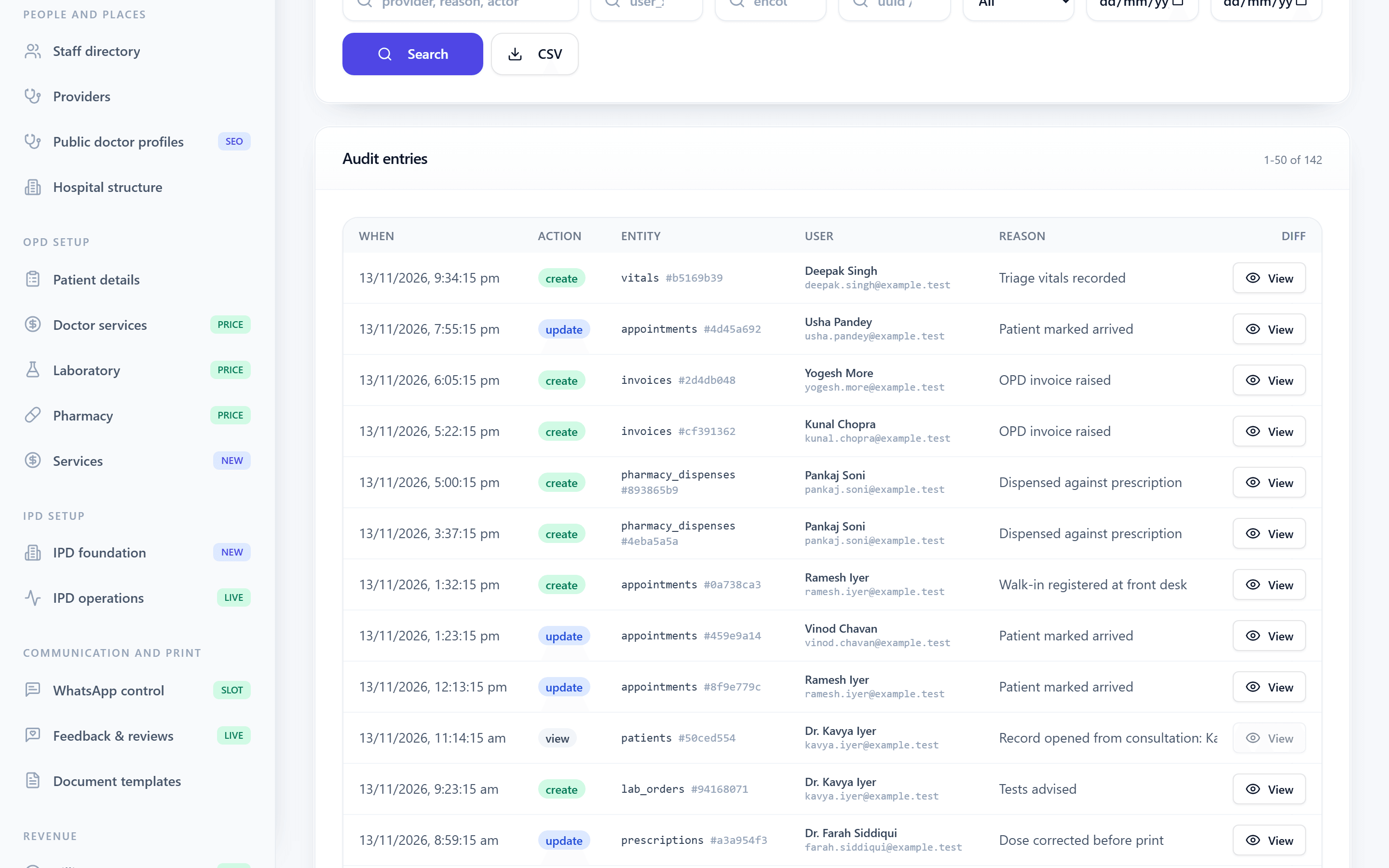
Audit log
Who changed what, and when.
Vitals, arrivals, invoices and dispenses, each with the person and the reason.
Your data stays yours.
Each hospital is a separate, isolated account. Hosted in India.
Works beside what you have.
Keep your hospital software. Co Doctor connects to it through standard healthcare data formats.
Learns privately.
What the AI learns stays inside your hospital. No hospital’s data trains a shared model.
At a glance.
- Who it’s for
- Small and mid-size private hospitals and nursing homes in India. Large hospitals and chains can run it beside the system they already have.
- Departments
- Front desk and queue, nursing, OPD consultation, lab, pharmacy, billing, inpatient wards (rounds, patient chart, discharge), the admin console and the director’s dashboard.
- Size
- About 96 working screens across about 15 staff roles, on one patient record.
- What the AI does
- In the OPD, it gathers the history, vitals, reports and warning signs, and drafts the likely diagnosis, prescription, tests and advice in each doctor’s own style.
- What it does not do
- It does not diagnose or prescribe on its own. A licensed doctor approves everything. It is not a certified medical device.
- Patients need
- No app and no login. Intake, reports, follow-up check-ins and booking happen on WhatsApp and secure links. Patients book online through your own doctor directory. WhatsApp for hospitals and doctor appointment booking software.
- Devices
- Runs in a web browser. Doctors also have a phone version.
- Your data
- Each hospital is a separate, isolated account, hosted in India. What the AI learns stays inside your hospital. No hospital’s data trains a shared model.
- Works beside
- Your existing hospital software, through standard healthcare data‑exchange formats.
- Plan and price
- Hospital plan, ₹10,999 a month. Custom pricing for chains and large hospitals. Free until Co Doctor drafts 90% of your prescriptions.3 Co Doctor pricing
- Live demo
- The director’s dashboard, live, on invented patients. Open the demo
- Who makes it
- brizAI, an Indian company. About brizAI.
- Last updated
Questions.
What is a hospital management system?
A hospital management system (HMS), also called hospital management software or a hospital information system, runs a hospital’s departments on one patient record, from registration and consultation to lab, pharmacy, wards and billing. Co Doctor is hospital management software built for Indian private hospitals, with an AI junior doctor that prepares each OPD visit for the doctor to approve.
Does Co Doctor connect reception, lab, pharmacy and doctors?
Yes. Lab management and pharmacy management are part of the same system, on the same record as the front desk and the doctor. When the doctor approves a visit, the lab gets its orders, the pharmacy gets its list and the patient gets the prescription on WhatsApp, without anyone retyping it.
Does Co Doctor handle inpatients (IPD) and hospital billing?
Yes. Co Doctor includes IPD management software and hospital billing software. Ward rounds, the patient chart and discharge planning are built in. Room, doctor, nursing, pharmacy and lab charges collect on one itemised bill for the stay, and the front desk bills OPD visits and closes each cash session.
Do we have to replace our current hospital software?
No. Co Doctor can run the whole hospital, or sit beside the software you already have and connect to it through standard healthcare data‑exchange formats.
How is Co Doctor different from other hospital software?
Most hospital software records what happened. Co Doctor also does the work: it prepares each OPD visit and drafts the prescription for the doctor. Once the doctor approves, it sends the lab and pharmacy their orders, the patient the prescription, and books the follow-up. It learns each doctor’s habits privately, and its prices are published. Compare Co Doctor with other hospital software.
How much does a hospital management system cost?
Co Doctor’s Hospital plan is ₹10,999 a month. Chains and large hospitals (3+ locations, 20+ doctors or 1,000+ patients a month) get custom pricing. The current offer is free until Co Doctor drafts 90% of your doctors’ prescriptions.3 See Co Doctor pricing.
Keep exploring.
- OPDThe outpatient day, end to end.Queue, vitals, the drafted prescription, lab, pharmacy and follow-up.
- SecurityYour data, kept apart.Isolated accounts, hosted in India, with an audit trail and a doctor who approves everything.
- Pricing₹10,999 a month for a hospital.Free until Co Doctor drafts 90% of your prescriptions. Custom pricing for chains.
See it from the director’s chair.
Open the director’s dashboard in the live demo. The patients are invented. The product isn’t.