EMR software: The whole story. Before hello.
An EMR that fills itself. History, vitals, reports and allergies on one screen, and how the patient did since last time. You never start from scratch.
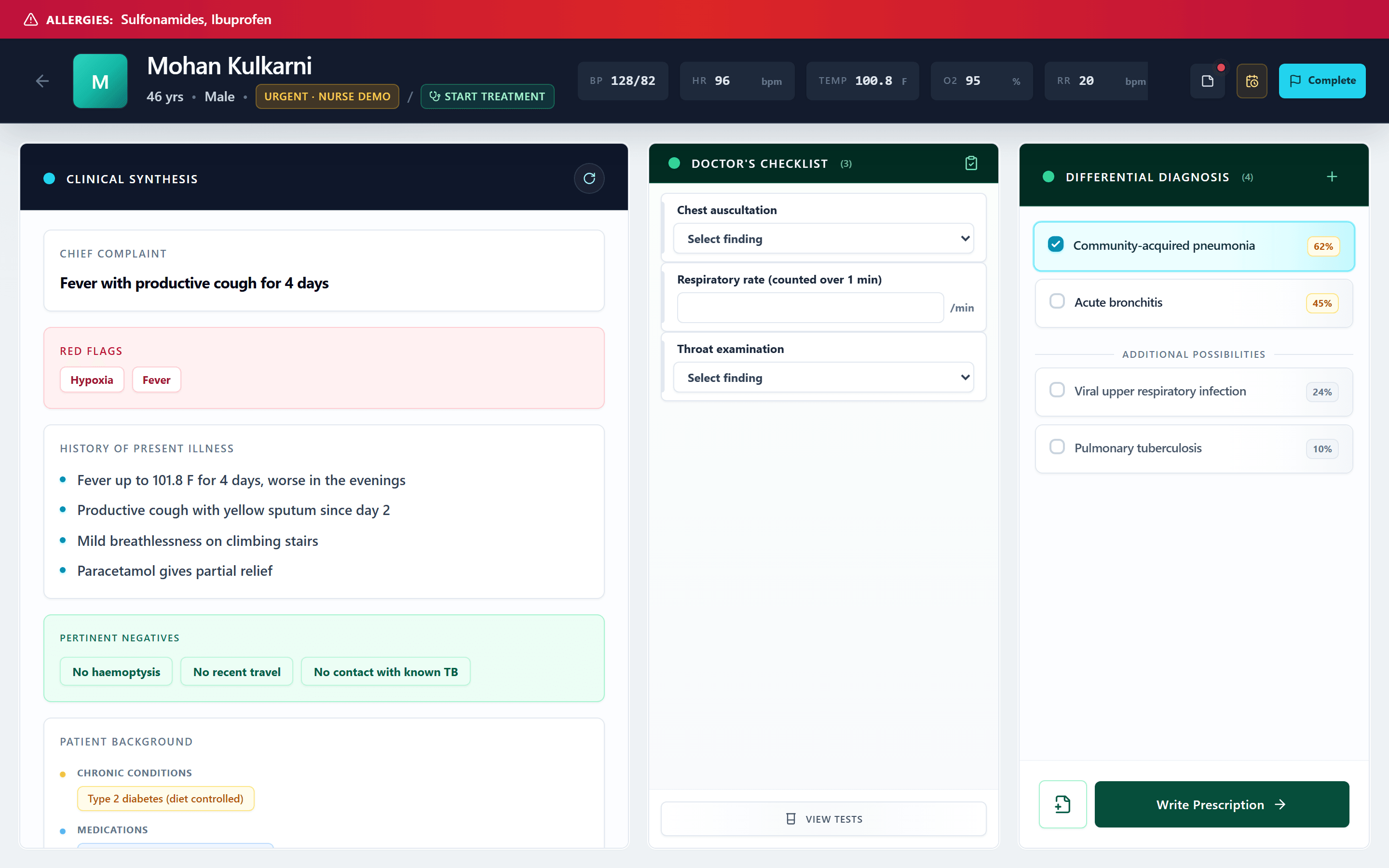
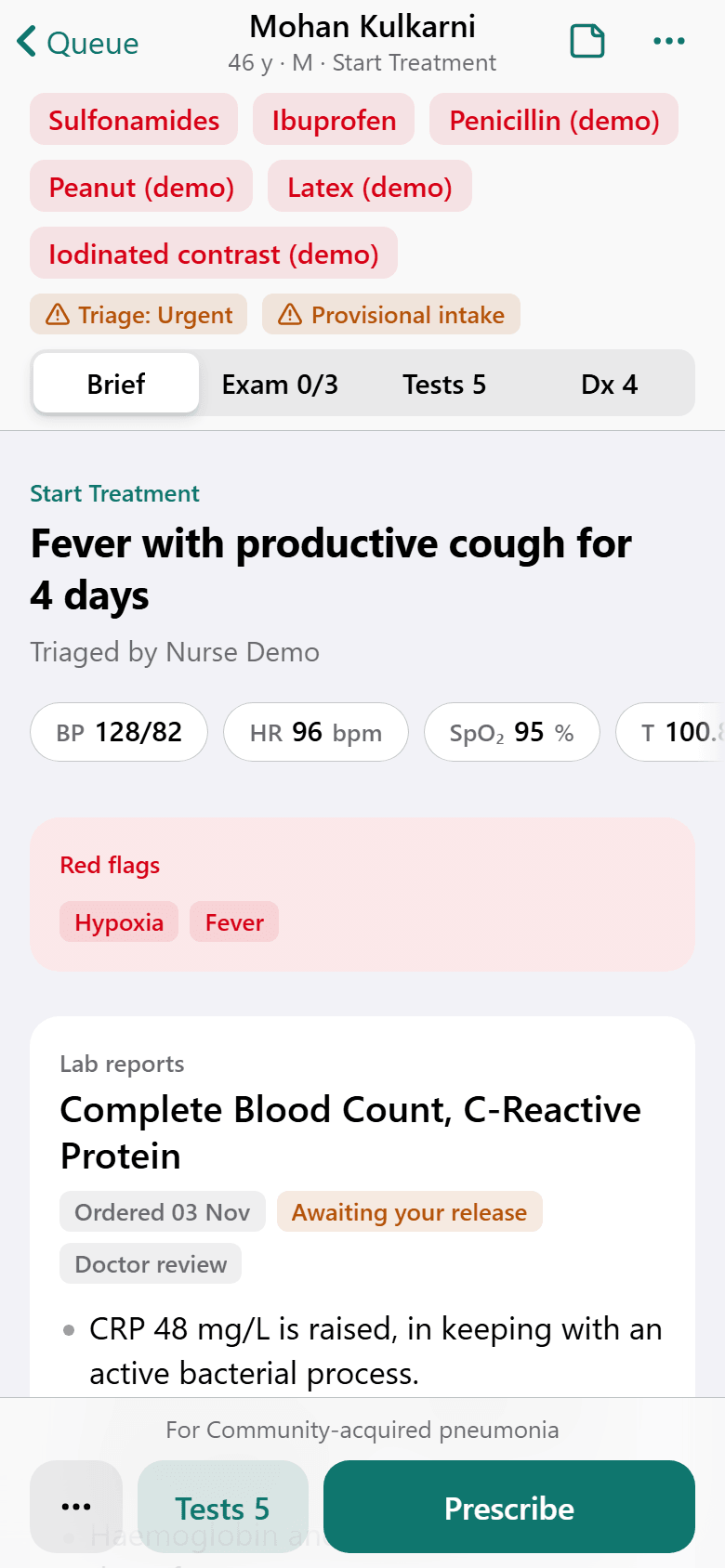
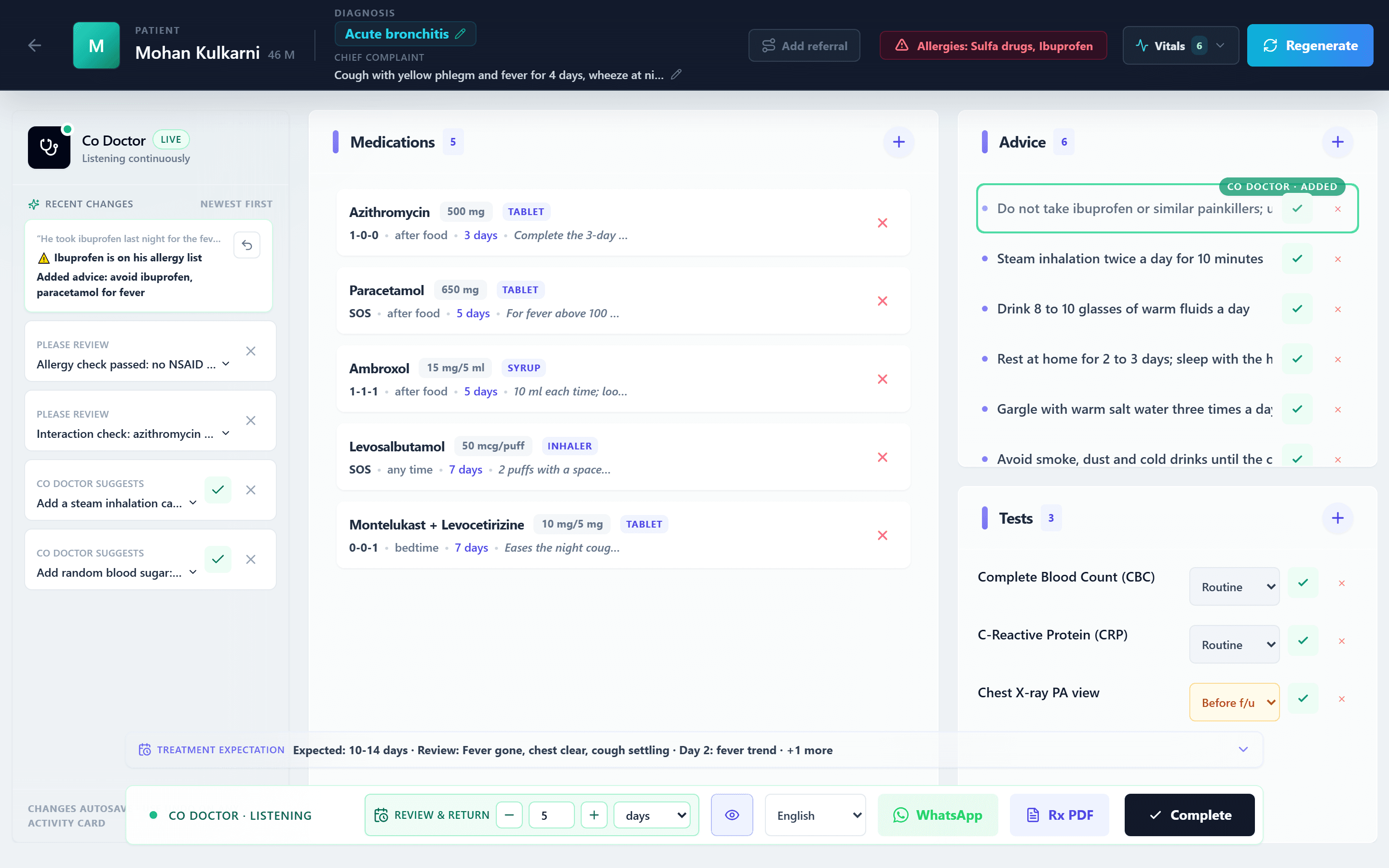
The consultation, as it opens. Allergies across the top, red flags first.3
Co Doctor is EMR software, also called EHR software, for clinics and hospitals in India. The record fills itself: history from the patient on WhatsApp, vitals from the nurse, reports from the lab, and every visit, check-in and inpatient stay on the same record. The doctor reads it on one screen and approves everything that goes out.
Before the visit
It fills itself.
Your patient, your nurse and your lab each add what they know, as the morning goes. You open the visit to the whole story.
Mohan Kulkarni46 yrs · Male
Ready for you
- AllergiesSulfonamides, IbuprofenFrom: On file
- Red flagsHypoxia · FeverFrom: Co Doctor
- ComplaintFever with productive cough for 4 days. Paracetamol gives partial relief.From: Patient · WhatsApp
- VitalsBP 128/82 · HR 96 · Temp 100.8 F · SpO₂ 95%From: Nurse · Triage
- Lab reportCRP 48 mg/L, raised. Awaiting your release.From: Lab
Your patient, on WhatsApp.
A few questions from the waiting room: the complaint, how long, what they’ve taken. No app, no login.
Your nurse, at triage.
Vitals go straight onto the record. Nobody copies them across.
Your lab.
Reports land on the patient, not in a pile, and wait for your review.
You.
Your findings and your diagnosis. Then AI prescription software drafts the prescription from this record, for you to approve.
Every visit after
Pick up where you left off.
One record follows the patient from the first visit to the next, through the ward and back. Nothing starts from a blank page.
Between visits
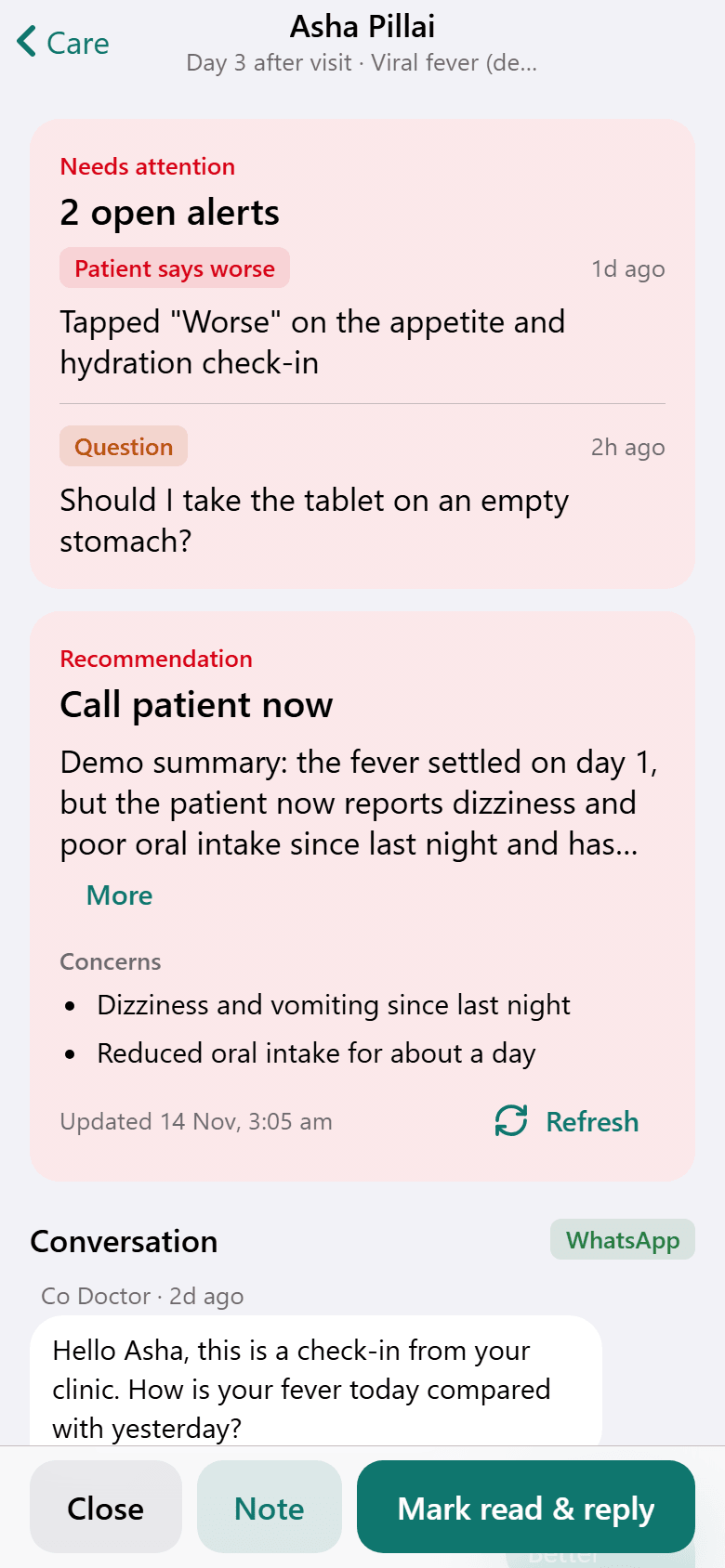
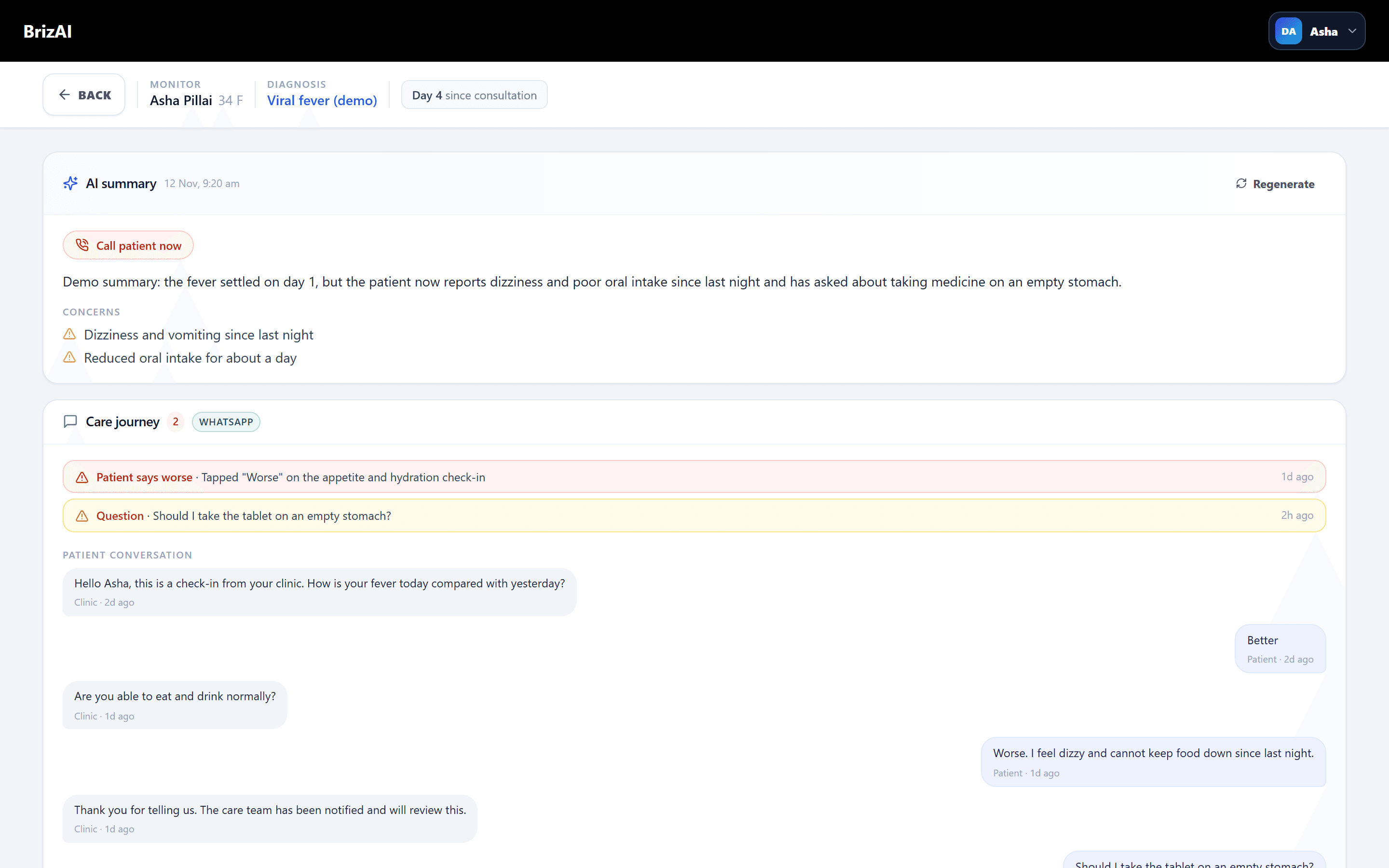
The next visit opens with how they did.
Check-ins on WhatsApp, the patient’s replies and their questions land on the record, summed up for you. If they felt worse, it’s at the top, with what changed.
WhatsApp for hospitals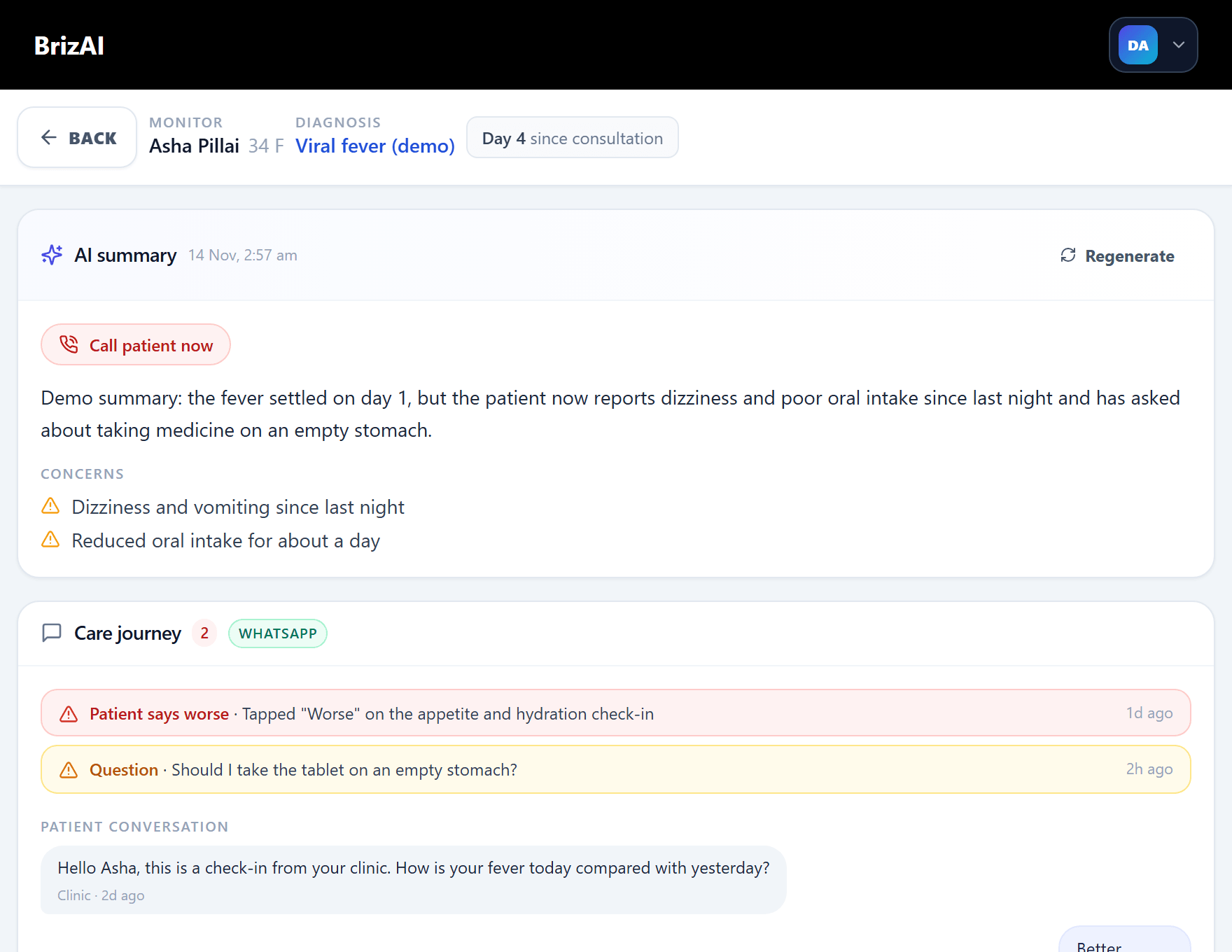
Inpatient
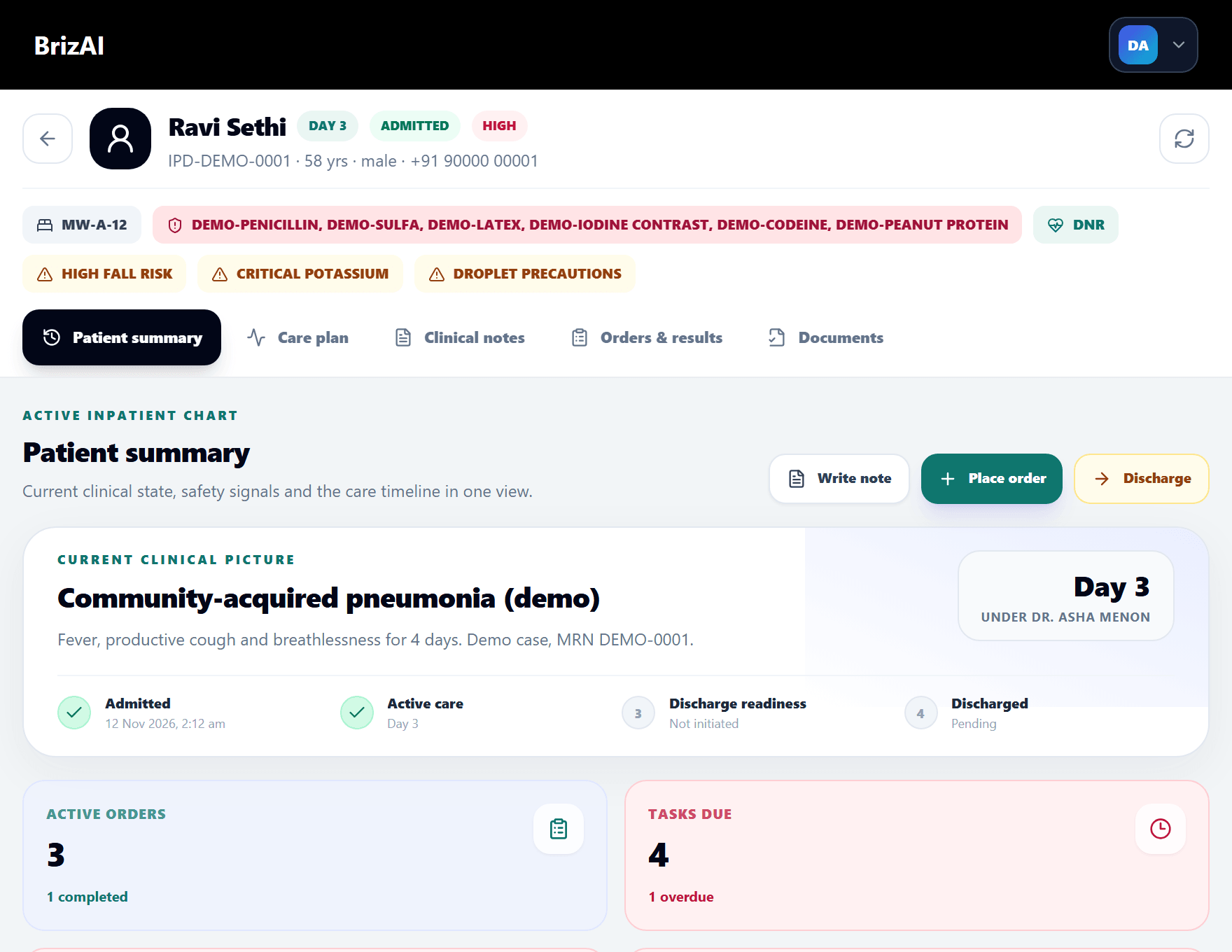
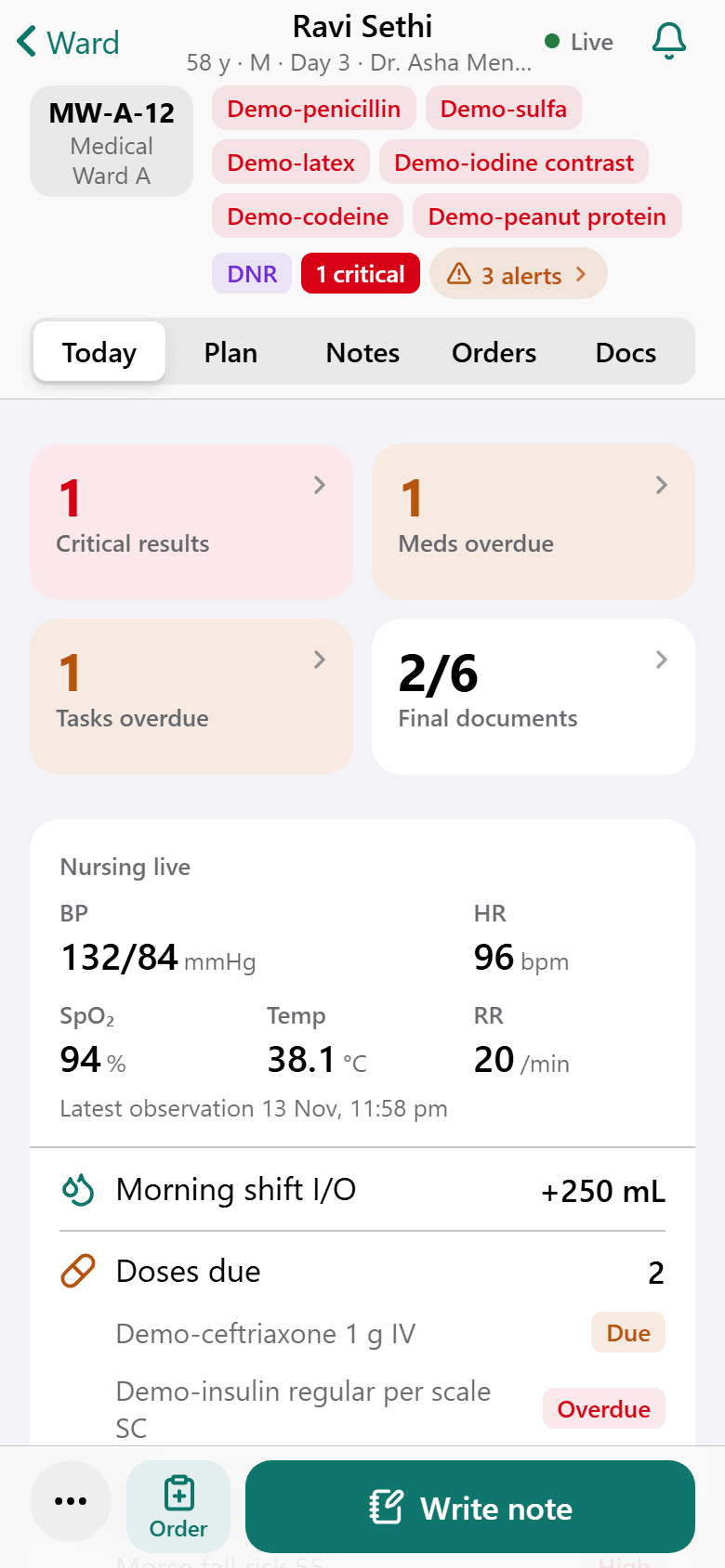
Admitted? The chart carries on.
Ward rounds, the patient chart and discharge work on the same record. Every event since admission, newest first, with who recorded it.
Clinical notes
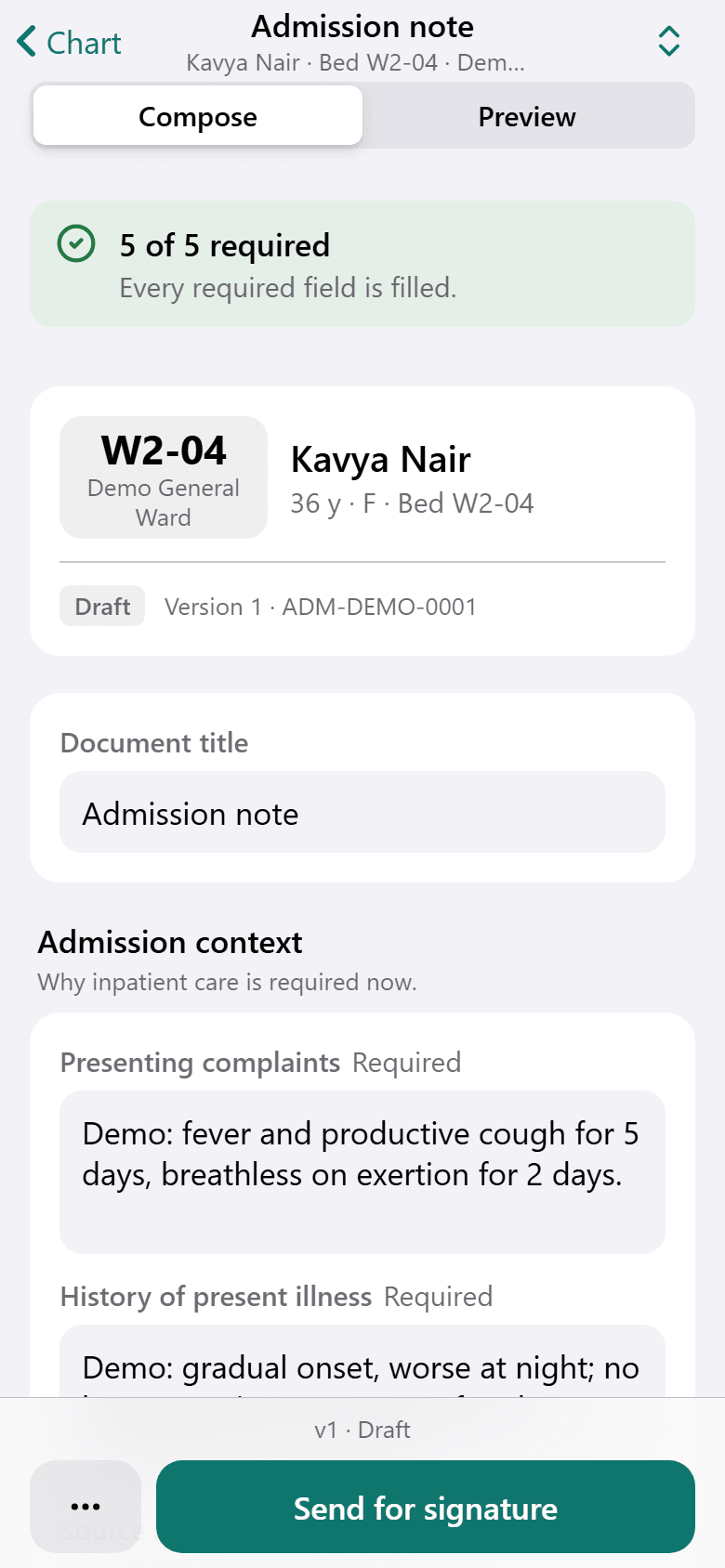
Notes that stay as you signed them.
Admission notes, progress notes, charts, consent and referrals, each with the fields it needs. Every save keeps a version, and a signed note stays locked.
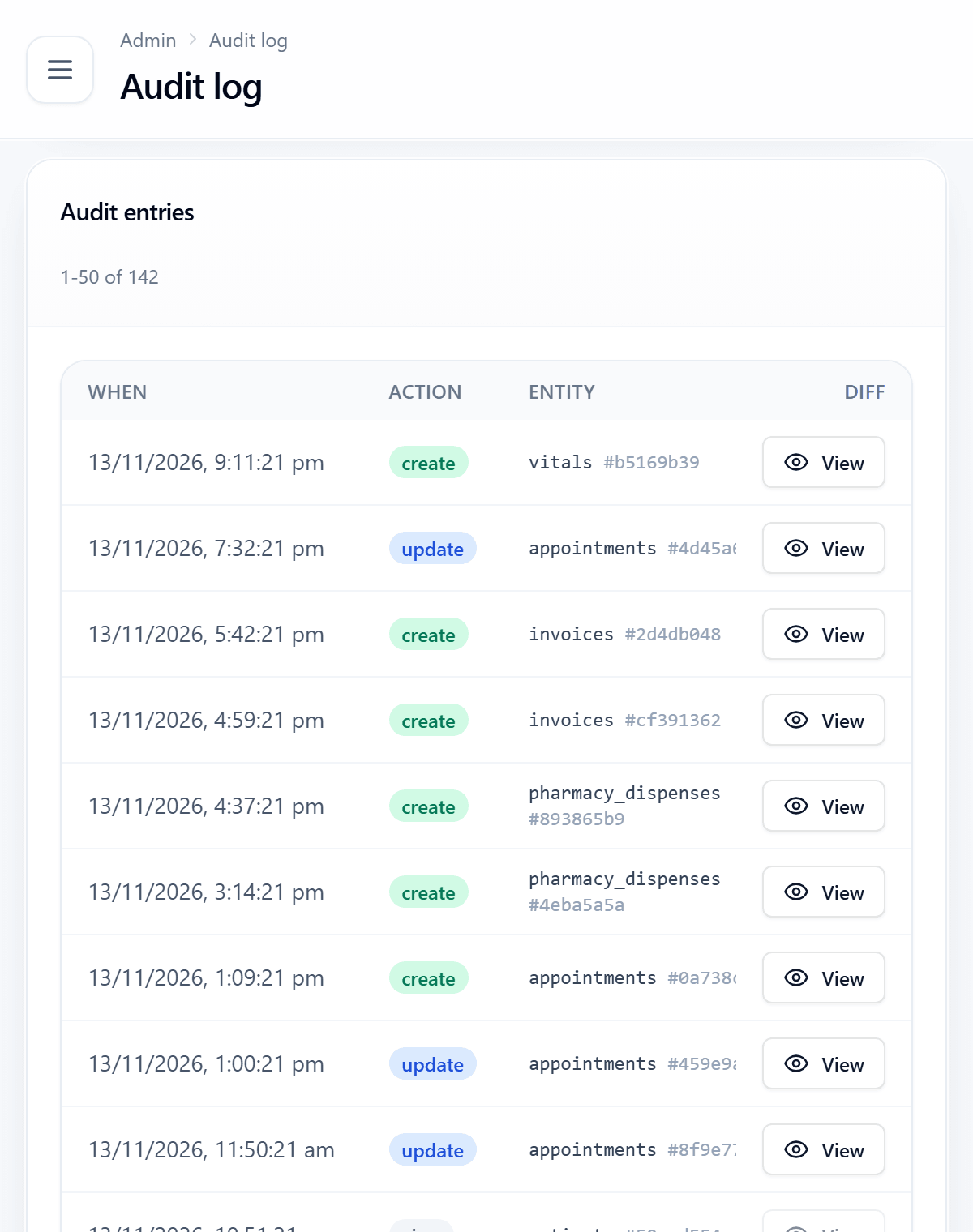
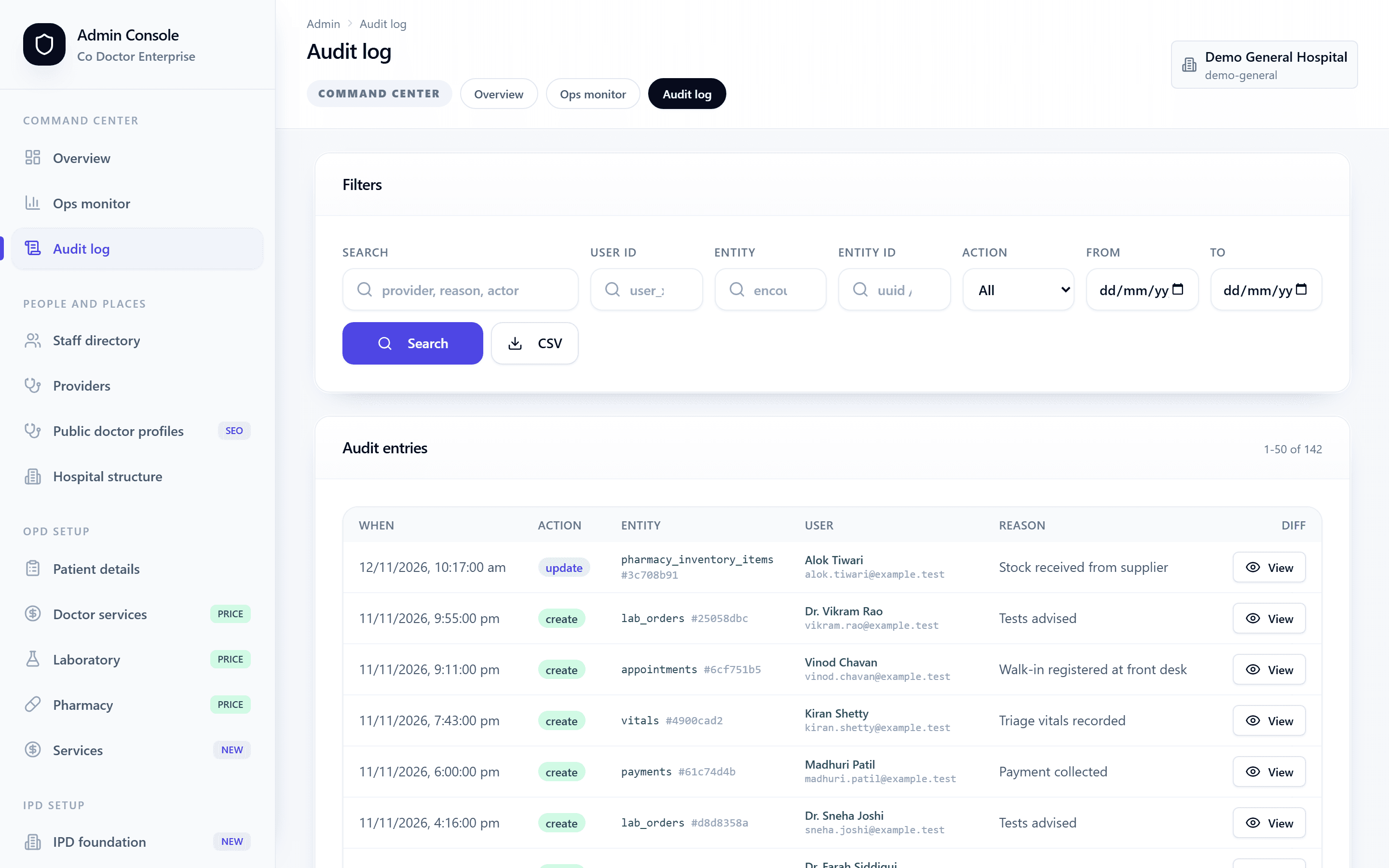
Audit trail
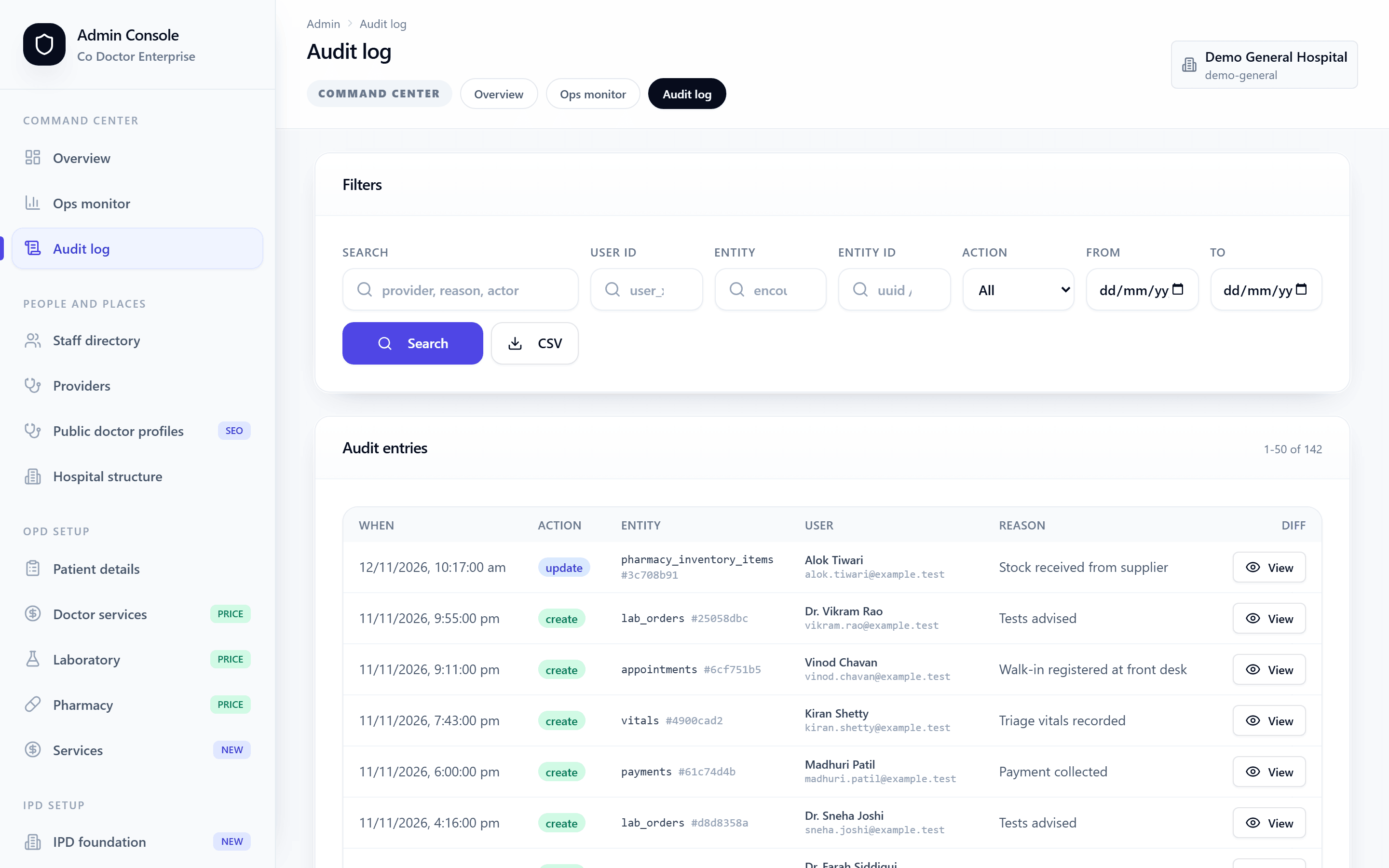
Every change, on record.
Each entry carries who made it and when, from the front desk to the ward. Open any change and see what it was before.
Each hospital, its own record.
A separate, isolated account for every hospital. Hosted in India.
What it learns stays yours.
What the AI learns stays inside your hospital. No hospital’s data trains a shared model.
Sits beside your HMS.
Keep your hospital system. Co Doctor exchanges data with it in standard healthcare formats.
At a glance.
- What it is
- EMR software (electronic medical records, also called EHR) for the OPD and the ward, with an AI that gathers and orders the record before each visit.
- Who it’s for
- Doctors and doctor-owned clinics, small and mid-size private hospitals, and larger hospitals and chains that keep their current system.
- What the record holds
- Complaint and history, vitals, allergies, red flags, chronic conditions and medicines, lab reports, diagnosis, prescriptions and tests, follow-up check-ins, inpatient notes and charts.
- Who fills it in
- The patient on WhatsApp, with no app and no login. Then the front desk, nurses, the lab, the pharmacy and doctors: about 15 staff roles in all.
- What the AI does
- Gathers the history, puts it in the order you would ask, flags warning signs, sums up how the patient did between visits, and drafts the prescription for your review.
- What it does not do
- It does not diagnose or prescribe on its own. Every prescription, test and message goes out only after a doctor approves it. Not a certified medical device.2
- Record keeping
- Every change is logged with who made it and when. Signed clinical notes stay locked, and each save keeps a version.
- Devices
- A web browser on any desktop or laptop, and a phone version for doctors.
- Hosting
- India. Each hospital is a separate, isolated account.
- Works beside
- Your existing hospital software, using standard healthcare data formats. How it sits beside your HMS
- Plans
- Clinic ₹5,999 a month. Hospital ₹10,999 a month. Custom pricing for chains and large hospitals. Free until Co Doctor drafts 90% of your prescriptions.1 Co Doctor pricing
- Live demo
- Open a consultation and read the record the way a doctor does. The patients are invented.
- Who makes it
- brizAI, an Indian company. About brizAI.
- Last updated
Questions.
What is the difference between EMR and EHR software?
Strictly, an EMR is the record kept inside one clinic or hospital, and an EHR is built to travel between them. In India the two words are used for the same thing. Co Doctor keeps one record per patient across your OPD, wards, lab and pharmacy, and can exchange it with other systems in standard healthcare data formats.
Do I have to type the patient’s history myself?
No. With Co Doctor, the patient answers a few questions on WhatsApp before the visit, the nurse adds vitals, and lab reports arrive on the same record. You read it, correct anything, and add your own findings.
Is Co Doctor an AI EMR? Does the AI diagnose?
Co Doctor is an EMR with AI built in. The AI gathers and orders the record, flags warning signs and sums up how the patient did between visits. It does not diagnose or prescribe on its own. Every prescription, test and message goes out only after a doctor approves it.
Does the Co Doctor EMR cover inpatients?
Yes. Ward rounds, the patient chart, clinical notes and discharge work on the same patient record as the OPD.
Can we keep our current hospital software?
Yes. Co Doctor can sit beside it and exchange data in standard healthcare formats, so you don’t have to replace your HMS to start. See OPD management software beside your HMS.
Where is the patient record stored?
In India. Each hospital is a separate, isolated account, every change is logged with who made it and when, and what the AI learns stays inside your hospital. More on Co Doctor security.
Keep exploring.
- PrescriptionAlready written. Your way.Diagnosis, medicines, tests and advice, drafted from this record for you to approve.
- WhatsAppFollow-up, with no app.Prescriptions, reports and recovery check-ins on WhatsApp. Every reply comes back here.
- SecurityHosted in India. On record.Each hospital isolated, every change logged, and a doctor approves everything.
Open a record. Read the whole story.
Click through a consultation in the live demo. The patients are invented. The product isn’t.